Google is also positioning the product as a way to reduce shopping mistakes before a purchase is finalized. During a pre-I/O briefing, the company described how Universal Cart could analyze components selected for a custom PC build and identify compatibility issues, such as mismatched processors and motherboards, before checkout. The system can then suggest replacement parts.
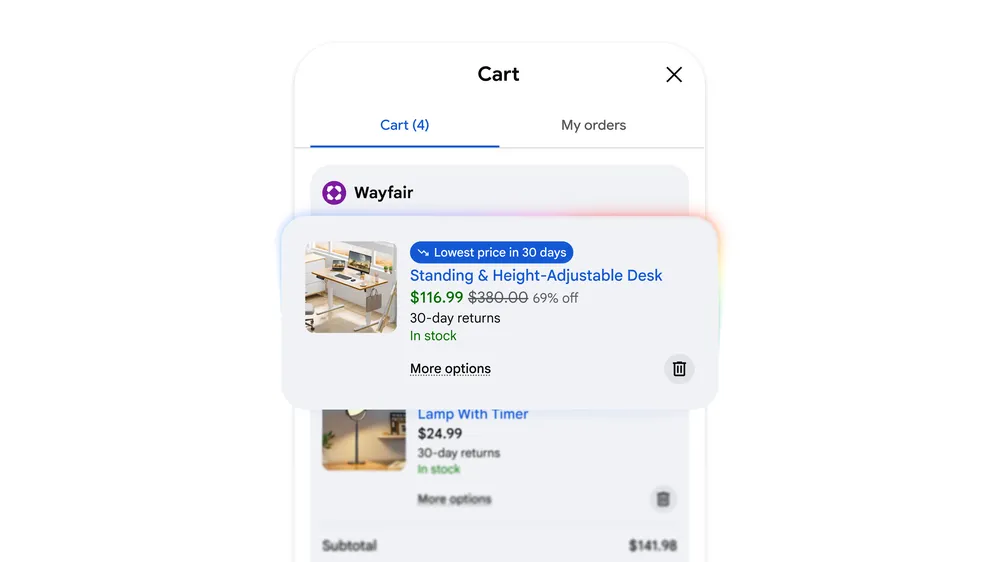
Another part of the feature focuses on payment card incentives. If users register multiple payment cards with Universal Cart, the service can identify retailer-specific rewards or perks tied to those cards and recommend which payment method may offer the best benefit for a transaction.
The rollout reflects Google’s broader push to expand Gemini beyond chat-based interactions and into task-oriented services that operate in the background. Rather than functioning solely as a search tool, Universal Cart turns Gemini into an assistant that continuously monitors products and purchasing activity after a shopper leaves a retailer’s website.
Google said Universal Cart will launch for U.S. users on Google Search and the Gemini app this summer, with integrations for YouTube and Gmail planned later in the year.
The company also suggested the system will improve alongside future Gemini model updates. That raises potential questions around how shopping and purchasing data may be used as part of the product’s ongoing development, particularly as Google increases the role of AI systems in consumer commerce workflows.
This analysis is based on reporting from TechRadar.
Images courtesy of Google.
This article was generated with AI assistance and reviewed for accuracy and quality.
