Waze said the feature combines its real-time traffic data with contributions from a dedicated community of motorcycle map editors who continuously add rider-specific hazards to the platform. Motorcycle mode is initially launching in Argentina, Brazil, Colombia, Malaysia, Mexico, Peru, and the Philippines, with additional countries planned.
The app is also introducing personalized navigation, allowing route suggestions to reflect both a user's previous driving habits and Waze's understanding of local traffic conditions. For example, drivers who regularly choose highways over local roads may see those routes prioritized. Users who prefer not to receive personalized recommendations can select alternate routes or disable the feature in settings. Personalized navigation is rolling out globally on Android and iOS.
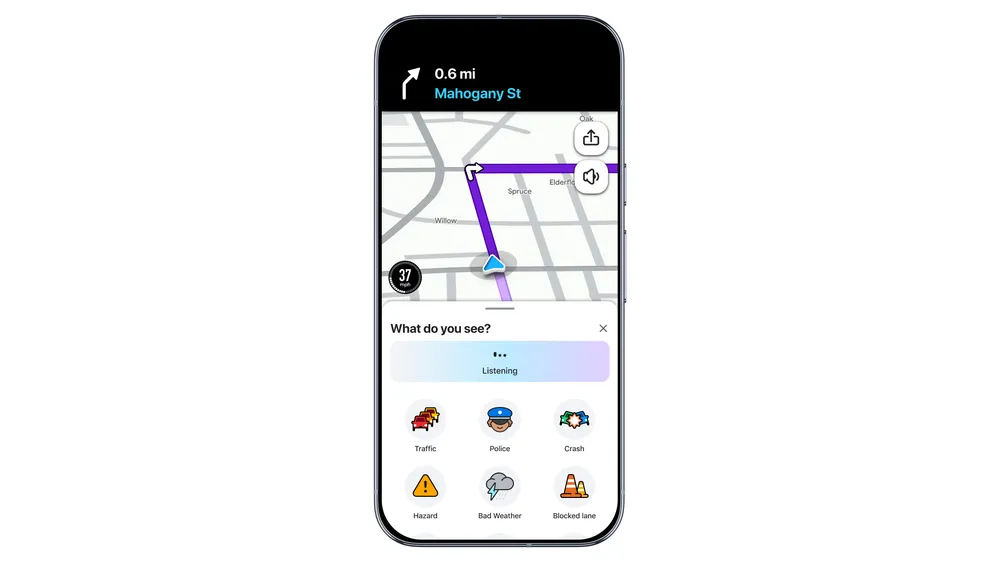
Another update expands Waze's existing conversational reporting tools, which already use Gemini capabilities to let drivers report traffic conditions through natural speech. Users can now also submit map corrections by speaking naturally, such as reporting a road closure or an outdated address. Those reports are sent to local map editors, who review the information before updating the map. The expanded conversational reporting feature is rolling out globally on Android and iOS.
Waze is also bringing Gemini capabilities into destination search. Instead of searching by business name or address, users can ask conversational questions such as finding a coffee shop that is currently open, parking near a specific location, or a nearby gas station with the lowest prices. Waze then returns a list of matching destinations that users can begin navigating to using voice commands. This feature is initially rolling out to the Waze beta community worldwide on Android and iOS.
For drivers who prefer fewer spoken directions, Waze has added a new "less chatty" mode. When enabled, the app reduces the number of voice prompts while continuing to provide essential navigation guidance, including upcoming turns, lane changes, and hazard alerts. The feature is also rolling out globally across Android and iOS.
The latest release combines AI-powered assistance with additional customization options, giving users more control over how they search for destinations, receive navigation guidance, report map updates, and tailor routes to their driving preferences.
This analysis is based on reporting from Google.
Images courtesy of Unsplash and Google.
This article was generated with AI assistance and reviewed for accuracy and quality.
