The system is built on Google’s Shopping Graph, which the company says contains more than 60 billion frequently refreshed product listings. That data allows the cart to track saved items and notify users when prices fall or products return to stock.
Users can also receive payment-related suggestions through Google Wallet. Universal Cart can take card benefits into account when recommending a payment method and can surface applicable promo codes before checkout.
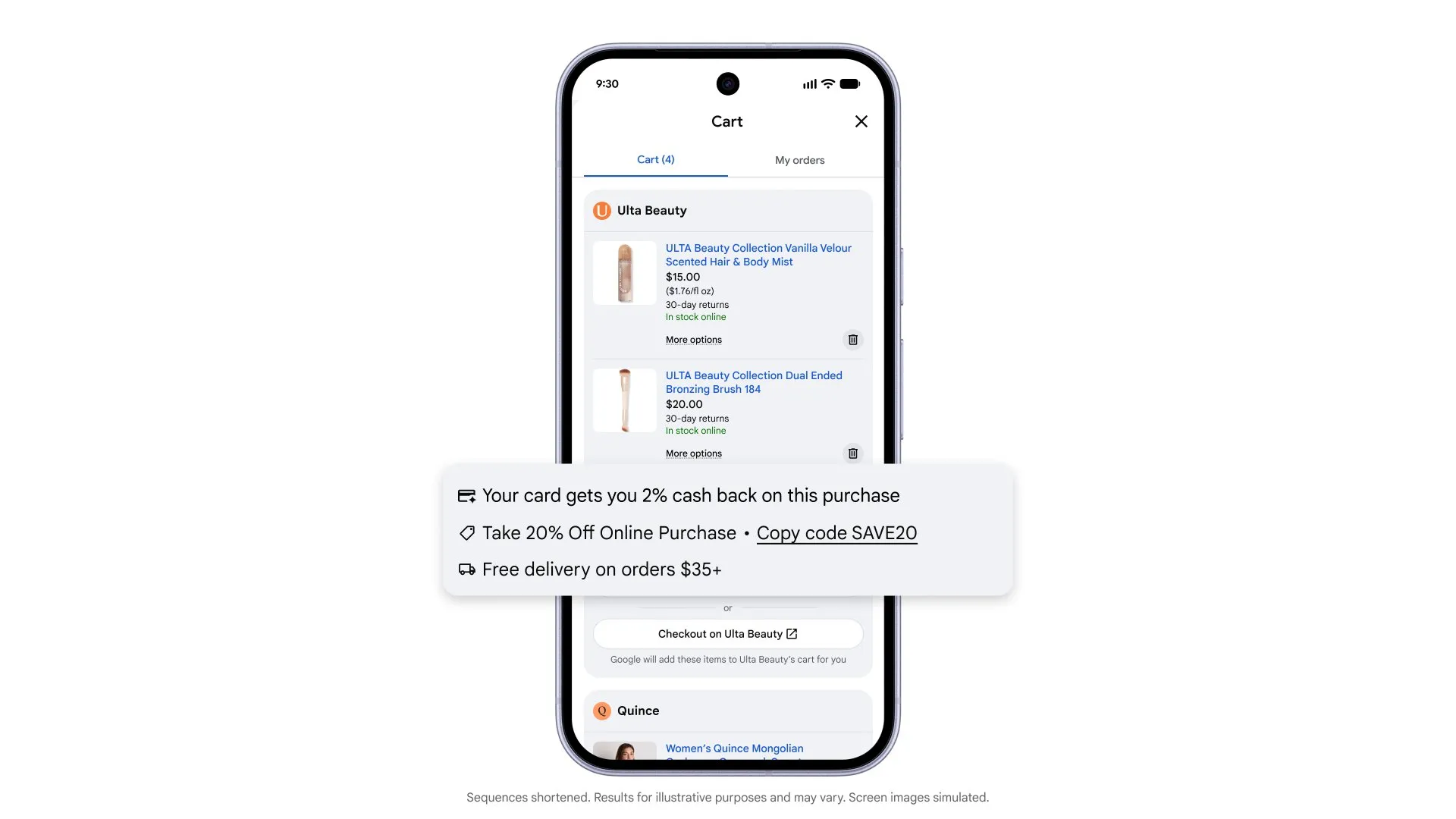
For eligible merchants, users can complete purchases directly through the cart with Google Pay. They can also move products into a retailer’s own cart and finish the transaction on that merchant’s site.
Google says participating sellers include Nike, Sephora, Target, Ulta Beauty, Walmart, Wayfair and many Shopify merchants. Retailers remain the seller of record and continue to handle order confirmations and customer support.
Checkout is powered by the Universal Commerce Protocol, an open standard Google introduced earlier this year for commerce interactions between platforms, retailers and AI systems.
The launch also adds another AI-supported shopping feature to Google’s broader commerce products. Search already includes conversational product discovery through AI Mode, while Google has also introduced tools that can contact local stores to check product availability.
Google’s earlier roadmap named Canada and Australia as markets expected to receive checkout support after the U.S., with the U.K. planned later. The company has not announced an EU launch for Universal Cart.
That omission comes as Google continues to face regulatory scrutiny in Europe over how it presents shopping and other commercial services inside Search. The European Commission fined the company €890 million in July under the Digital Markets Act, including €460 million tied to self-preferencing in shopping, hotel, transport and sports results.
Google was given 60 days to make changes or risk additional penalties. Search chief Nick Fox later said some of the company’s European changes “degrade the user experience for Europeans.”
The company has also kept some other AI-driven products out of parts of Europe. Gemini Spark, for example, launched in more than 160 countries but is unavailable in the European Economic Area, Switzerland and the U.K.
Universal Cart puts product discovery, saved items and checkout more tightly inside Google’s own services, while still relying on outside merchants to complete and support sales. For now, that model is available in the U.S., with further expansion planned in selected markets outside the EU.
This analysis is based on reporting from Google & TNW.
Images courtesy of Google.
This article was generated with AI assistance and reviewed for accuracy and quality.
