Figma is not presenting those instructions as a guarantee that agents will follow every rule. Instead, Specs is meant to provide additional context that can make AI-generated results more predictable.
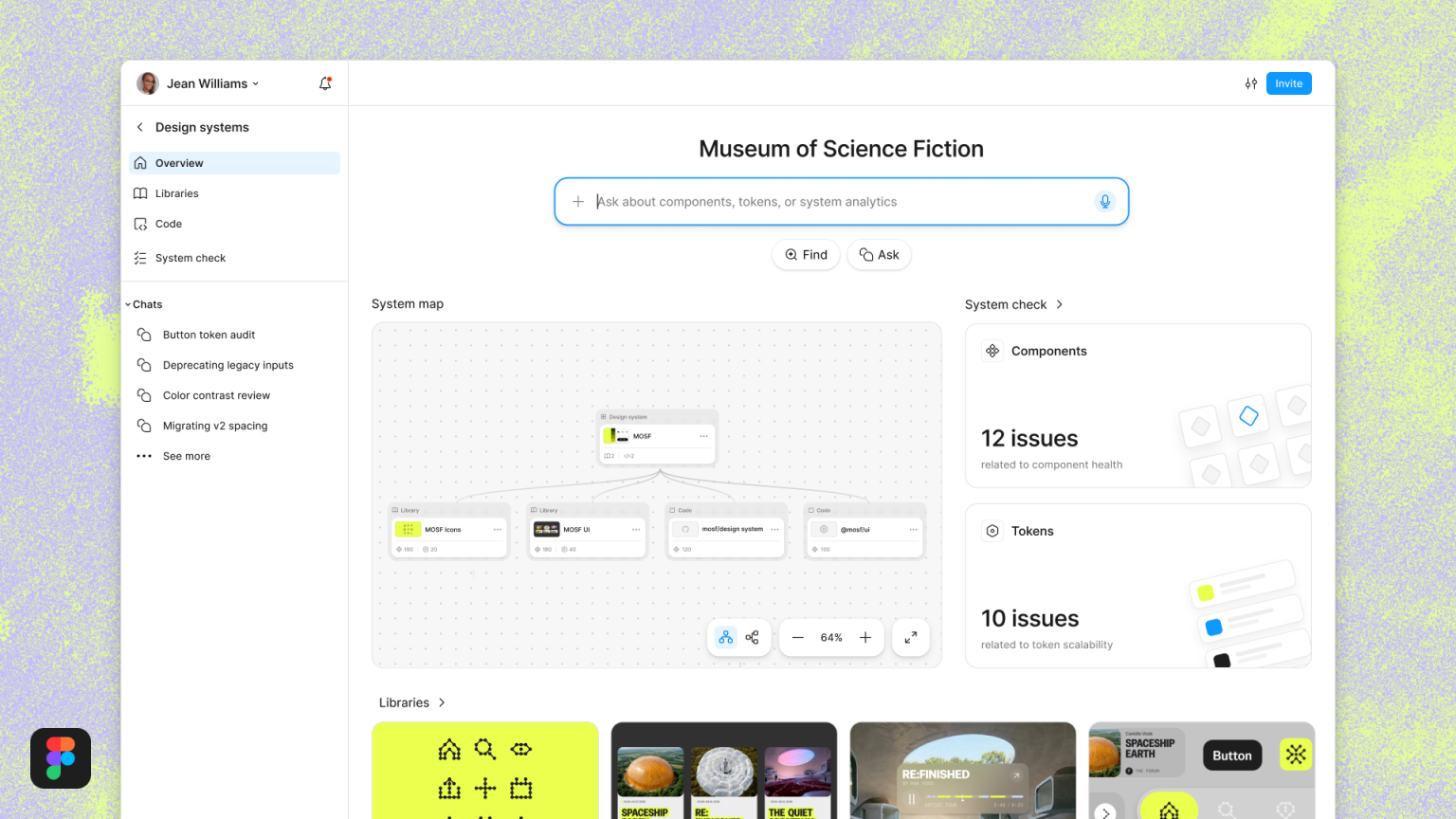
A Specs document can exist independently or appear alongside work on the Figma canvas. Teams can connect those instructions to designs, FigJam diagrams and code layers, while also incorporating design libraries, code libraries and other guidelines.
That structure gives agents more than written instructions alone. A team can pair its rules with the visual and technical material those rules refer to, creating a shared reference that both people and AI systems can use during a project.
The release follows Figma’s recent expansion of its canvas-based agent to more users. Specs adds a layer of guidance around that agent, giving teams a way to describe how work should be produced rather than relying only on prompts issued during individual design tasks.
“We see Figma as the place where software teams come to decide what they build and ship,” Figma Chief Design Officer Loredana Crisan told TechCrunch.
Figma also expanded access to code layers, which were first introduced in private beta in June. The feature has now entered public beta, allowing a broader group of users to experiment with code-driven elements inside designs.
Code layers are intended to make prototypes more interactive by bringing code directly into the canvas. Users can ask Figma’s agent to generate code from a design and then request changes to specific portions as the prototype evolves.
The workflow allows teams to continue refining a coded prototype without treating the initial generation as a finished result. Designers can work visually while using the agent to make targeted code changes during the iteration process.
Figma is also expanding the number of outside tools that can connect with its platform. The company said more than 20 additional tools are supported through MCP connections, including Open Code, Dia, Grok Bot and Sarvam.
Those integrations extend the AI workflow beyond Figma’s own agent. Combined with Specs, they give teams a common source of design guidance that can also be used when outside agents participate in the process.
Another update connects Figma Make with Payload, a content-management system. The integration is designed to support the creation of dynamic websites while allowing their content to be managed directly through the connected system.
That capability serves a different part of the workflow from code layers. While code layers focus on building and revising interactive prototypes, the Payload integration adds a way to connect generated website experiences with managed content.
The announcements were made during Figma’s first Config event in India. According to the company, India is its largest user market outside the United States, and Figma works with 40% of the top 100 companies listed on the Bombay Stock Exchange.
Taken together, the updates give Figma teams several new ways to structure AI-assisted work: Specs provides shared instructions, code layers make coded prototypes available to more users, MCP connections bring additional tools into the workflow, and the Payload integration adds support for dynamic website content.
This analysis is based on reporting from Superpower Daily & the tech buzz.
Images courtesy of Figma.
This article was generated with AI assistance and reviewed for accuracy and quality.
