Your Algorithm can be accessed through the three-dot menu on Facebook posts. Meta is also adding Interested and Not interested options that let people respond directly to individual recommendations.
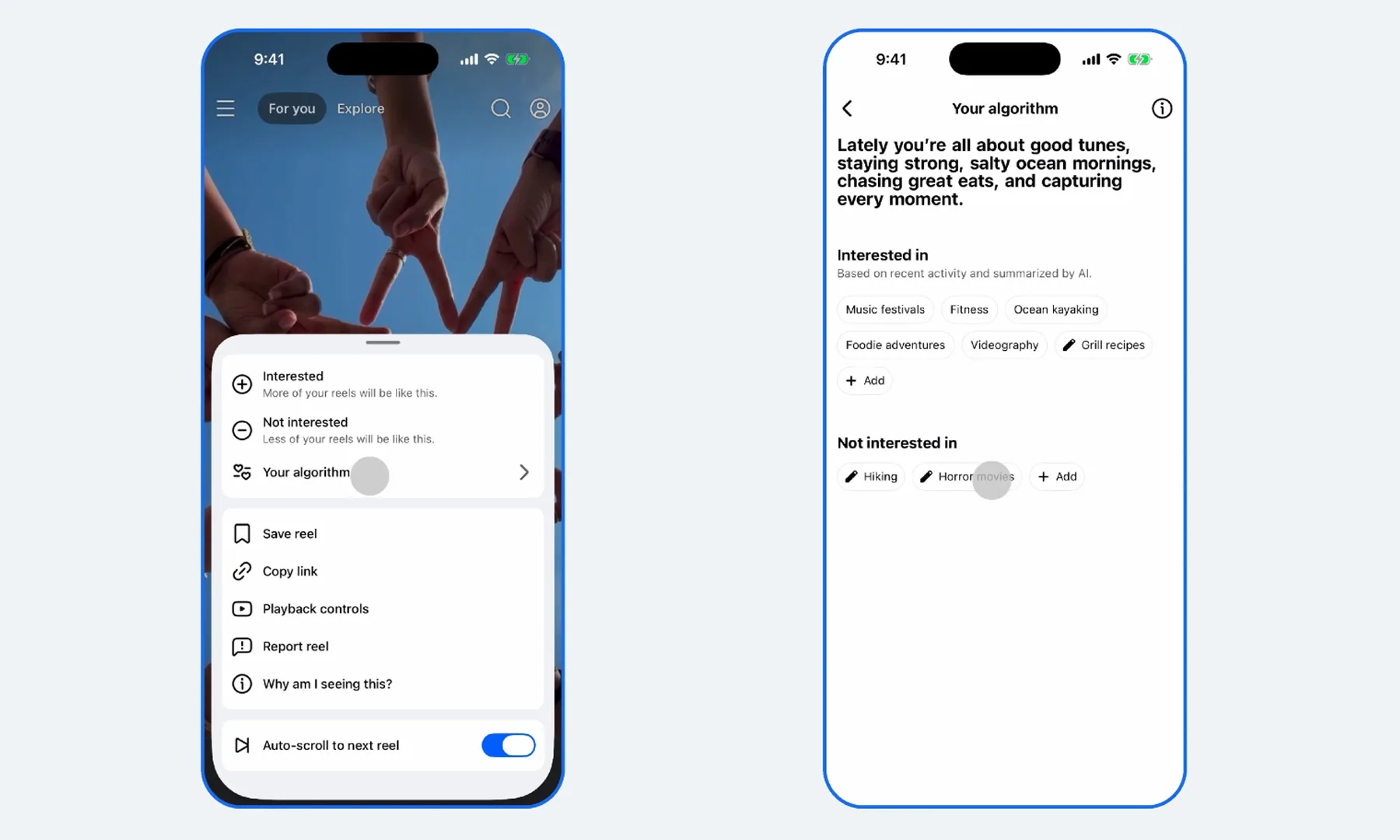
After a user selects one of those options, Facebook may ask follow-up questions to gather more detail about what they liked or disliked. Users can then explain their preferences in their own words, giving the platform more explicit guidance about what should appear in Feed and Reels.
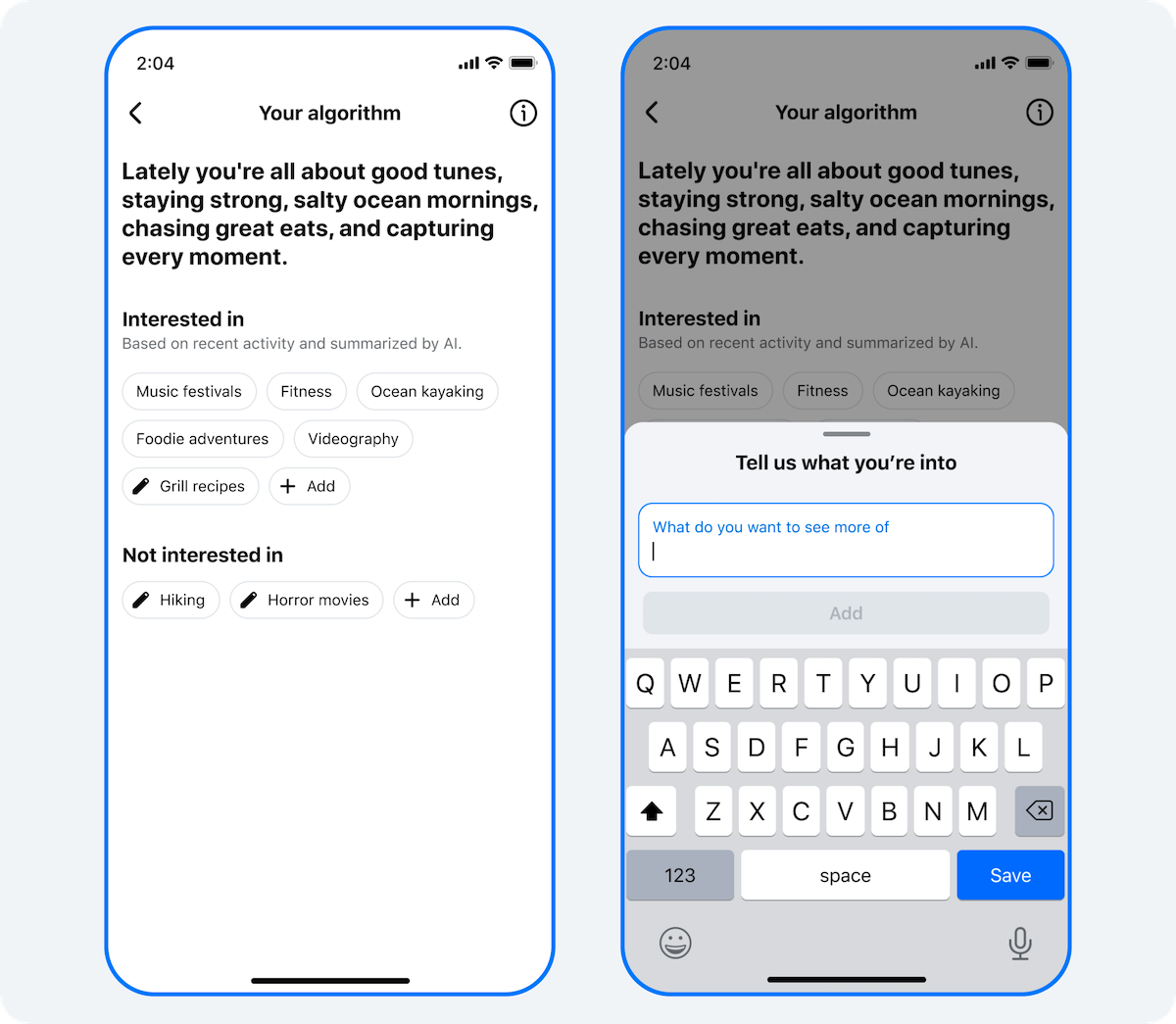
Meta says those changes can affect recommendations during the same session.
The company is using large language models to interpret the interests, context and intent contained in freeform feedback. That information is then combined with the signals Facebook already uses when ranking content, including interactions with posts and videos.
Previously, Facebook’s recommendation systems largely had to infer preferences from user activity. The new controls add a conversational layer that allows people to state those preferences more directly.
Meta said the ranking systems behind Feed and Reels will continue using existing behavioral signals alongside the new text-based feedback rather than replacing them.
The company has also redesigned the three-dot menu on posts to make the customization controls easier to reach.
“We’re introducing new AI-powered tools that help you shape what you see in Feed and Reels by telling us what you’re interested in, in your own words,” Meta said.
Your Algorithm follows similar personalization features introduced across Instagram and Threads, where users have also gained more direct ways to influence recommendation systems.
The Facebook rollout is beginning now, with availability varying as the feature reaches users. As it expands, Facebook users will have a more explicit way to influence the content ranking systems that determine what appears in their feeds, rather than depending entirely on the platform to interpret their behavior.
This analysis is based on reporting from Meta & digitaltrends.
Images courtesy of Meta.
This article was generated with AI assistance and reviewed for accuracy and quality.
