Daydream says more than 2 million people have used its platform since launch. The new agent builds on that activity by retaining information about shoppers' preferences, including their personal style, sizing needs and budgets, and adjusting recommendations based on previous conversations.
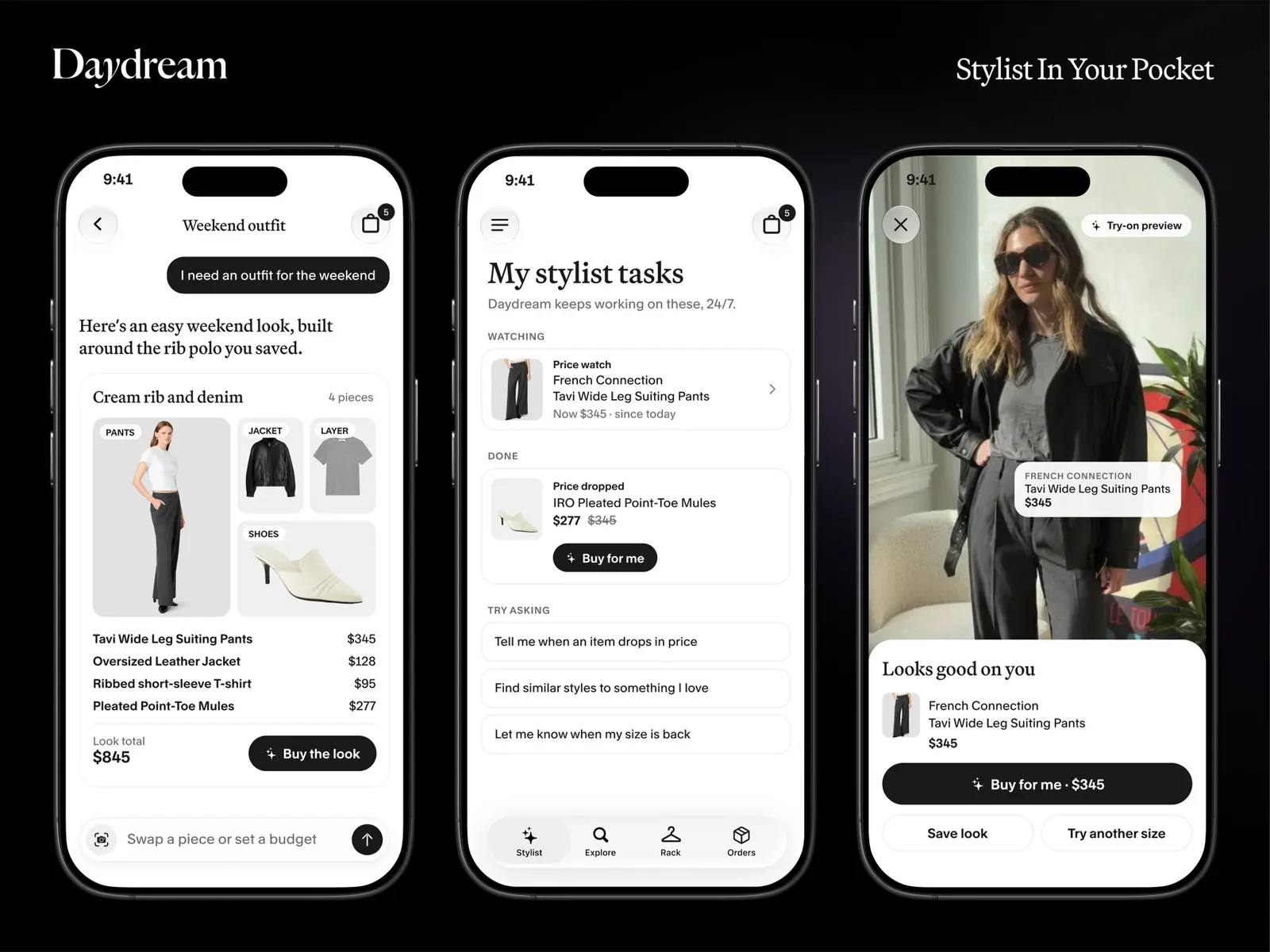
Rather than simply returning search results, the agent can suggest coordinated outfits with clothing, shoes and accessories. Customers can request individual items, describe an event they are preparing for or provide a reference image to find similar products.
"We built the Daydream Platform to revolutionize how people shop for fashion and now the new Daydream Agent takes it to the next level," said Julie Bornstein, founder and CEO of Daydream. "Online shopping gives us more choice than ever, but we still spend hours searching, comparing and figuring out what goes together."
One of the platform's main additions is the ability to complete purchases through participating retail partners. After reviewing recommendations, shoppers can authorize the agent to handle checkout rather than completing each transaction manually. Purchases still require customer approval.
The agent also introduces a persistent clothing rack where users can save products, compare different options and return to items before making a decision. A virtual try-on feature allows shoppers to upload a photograph once and use it to preview clothing saved to their rack.
Daydream's shopping network includes approximately 350 retail and brand partners, representing more than three million products. The platform combines information about current prices and availability with its fashion-specific recommendation technology to identify items that match individual requests.
Beyond responding to immediate shopping questions, the agent can perform ongoing tasks. Customers can ask it to watch for discounts, check whether products become available, follow new collections from particular brands or provide weekly fashion updates.
Those background capabilities are intended to reduce the need for repeated searches. Once a shopper identifies a product or describes an ongoing need, the agent can continue looking for suitable options and notify them when relevant information becomes available.
Daydream is also expanding how the platform incorporates information about a customer's existing wardrobe and schedule. With permission, shoppers can connect closet and calendar information so the agent can recommend outfits using clothing they already own or prepare suggestions for upcoming occasions.
The company is developing additional integrations with Gmail and Google Calendar that would allow the agent to identify relevant events and learn from information such as previous purchases. Planned Pinterest integration would give shoppers another way to communicate their fashion preferences.
These capabilities introduce additional considerations around customer data. Connecting email and calendar accounts would give Daydream access to personal information beyond conventional shopping preferences, making the scope of those permissions and users' control over them important aspects of the service.
Daydream is also incorporating professional styling expertise into the agent's recommendations. The company has appointed international fashion stylist Francesca Salih as its first Stylist in Residence, bringing human input into how the system coordinates clothing and provides fashion advice.
Salih has developed styling content covering topics such as dressing for particular occasions and creating capsule wardrobes. Daydream uses professional stylists alongside its fashion knowledge technology to improve how the agent evaluates clothing combinations and individual preferences.
The company's approach reflects its belief that fashion shopping requires more specialized information than general-purpose AI assistants typically provide. Daydream maintains an internal fashion knowledge graph that adds contextual information to its product catalog, helping the agent consider details beyond basic product categories and prices.
"We feel like a generalized agent is just not going to get fashion right," Bornstein said. "Style is so nuanced. It relates to some very specific things that matter."
The launch comes as other technology companies and retailers develop AI-powered shopping assistants. OpenAI, Meta and Instinct are pursuing shopping capabilities, while fashion companies including Ralph Lauren and J.Crew have introduced their own AI styling tools.
Zalando has also announced plans for an AI shopping agent that will allow customers to purchase products from outside retailers beginning in 2027. Daydream's approach differs by concentrating on recommendations across multiple fashion brands rather than limiting discovery to an individual retailer's catalog.
The company is also making its technology available to retail partners. Approximately eight brand websites currently use Daydream's conversational search tools, and the company plans to extend some of the new agent capabilities to those businesses.
Daydream operates through commissions on purchases made through its platform. Bornstein said the company applies the same commission structure across products and does not use commercial arrangements to determine which items the agent recommends.
Although Daydream has reported more than 2 million users, it has not disclosed detailed conversion or retention figures that would show how frequently shoppers return or complete purchases.
The new Daydream Agent is available starting November 17 through the Daydream iOS app and SMS. Its combination of personalized styling, product monitoring and approved checkout gives the company a more comprehensive shopping service, moving beyond product discovery toward handling more of the steps involved in choosing and buying clothing.
This analysis is based on reporting from Vogue Business.
Images courtesy of Daydream.
This article was generated with AI assistance and reviewed for accuracy and quality.
