Rather than requiring users to construct an automation before delegating work, SpaceXAI designed Grok Bot around conversations. A user can message a Bot with an assignment in much the same way they would communicate with a colleague, then return to the same conversation later from a phone or desktop.
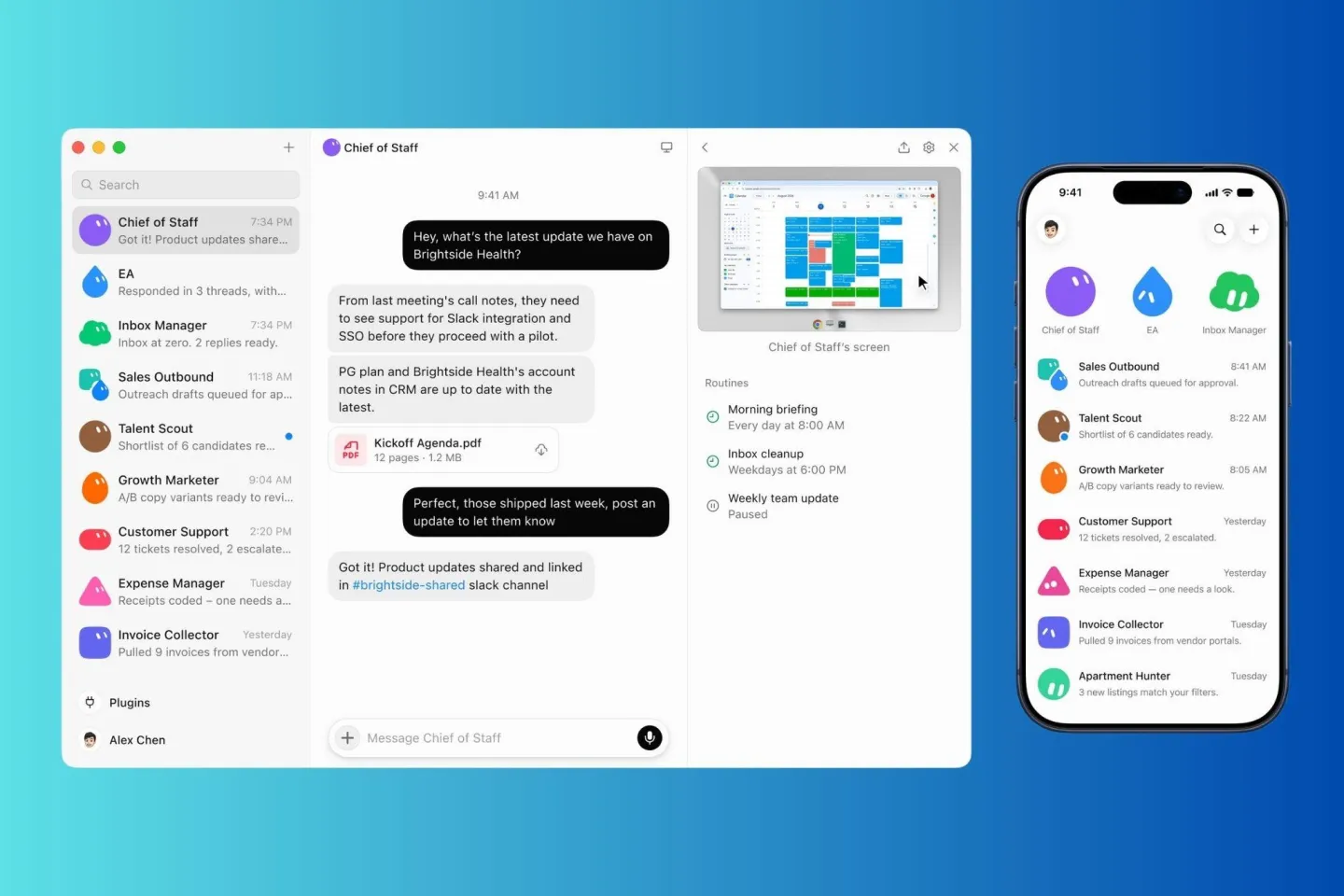
Each Bot can access the applications and services needed to perform its assigned work. That includes websites and tools without an API or Model Context Protocol integration. Because the computing environment runs in the cloud, a task can keep progressing without depending on the user's own computer remaining active. SpaceXAI says this allows the system to handle work that extends beyond producing an answer or generating content. A Bot can interact directly with the software where the job needs to be completed, moving between applications as part of a longer process.
The company developed Grok Bot initially as an internal prototype before expanding its use across its own teams. SpaceXAI says employees have created Bots for sales outreach, marketing, office administration, software fixes and other tasks. Examples described by the company include a sales Bot taking information from call transcripts, updating a CRM and preparing follow-up messages. An operations Bot can process invoices arriving through Gmail and handle tasks associated with new employees, while engineering Bots can reproduce software bugs, create tickets and pass work to another Bot responsible for debugging.
“There is a huge difference between 90% done and 100% done. Most AI gets you almost there. Grok Bot can finish the swing, because the work lands where a human would put it, in the actual tool,” Roman from Product said in the announcement.
SpaceXAI is also positioning Grok Bot as a system for managing several agents simultaneously rather than relying on a single general-purpose assistant. Individual Bots can specialize in areas including recruiting, expenses, inbox management, operations and debugging, while another Bot can coordinate work across those roles.
The agents can communicate directly with one another and exchange context through shared threads. Users can also put multiple Bots into a group conversation, where the agents can divide responsibilities and transfer work among themselves before involving the user when a decision requires human judgment. That coordination is paired with a system for teaching Bots recurring processes. Users can have a Bot observe them completing a task, allowing it to capture the steps and save the process as a reusable routine. Corrections can then be incorporated before the Bot handles the workflow independently in future runs.
SpaceXAI says the agents also retain information about how users prefer tasks to be handled. As they complete more assignments, Bots can maintain context around communication style, recurring exceptions and circumstances where they should either continue autonomously or request input. That memory is intended to support more proactive behavior over time. The company says Bots can revisit unfinished conversations, follow up when a handoff stalls and resume work using context from earlier interactions.
The greater level of autonomy also means the agents can operate inside authenticated workplace environments. Bots can interact with applications and websites using existing sessions, while sensitive actions can be placed behind human approval requirements. Actions involving passwords, verification codes or payment confirmations are intended to remain under direct user control.
SpaceXAI's examples of Grok Bot completing workplace tasks currently come from its own internal deployment and early users. The company has demonstrated the system across several types of business workflows, but its performance across a wider range of organizations and software environments has yet to be established.
The early beta nevertheless expands the scope of what SpaceXAI is offering through Grok. Instead of limiting the assistant to responding inside a conversation, Grok Bot is designed to take an assignment, operate the necessary software and return after the work has been completed or a decision requires the user's attention.
This analysis is based on reporting from xAI.
Images courtesy of xAI.
This article was generated with AI assistance and reviewed for accuracy and quality.
