For example, Claude can organize a proposed project on a digital whiteboard while participants discuss its requirements. It can also respond to questions in the meeting chat or retrieve business information, such as historical financial figures, without requiring participants to leave the call.
Once a meeting concludes, users can access notes, assigned action items and other materials generated during the discussion through claude.ai. The feature is intended to reduce the amount of administrative and planning work that typically follows workplace meetings.
Anthropic has also introduced safeguards governing Claude's participation. The assistant identifies itself when joining and notifies participants through the meeting chat. It cannot enter meetings involving external guests without administrator approval and will automatically exit if an external participant joins without that authorization.
Google Meet is the only supported video conferencing platform at launch, although Anthropic expects to extend availability to additional plans. The company has not specified when other meeting services might become supported.
The launch is accompanied by Claude Whiteboards, a collaborative workspace where users can brainstorm ideas and have Claude organize them into visual plans. The assistant can create timelines, identify deadlines and structure information as team members develop their ideas.
Whiteboards also integrates with Claude Meetings, allowing project plans to take shape during a live conversation. Once a planning session is complete, users can convert the resulting board into a document or presentation without transferring the information into another application.
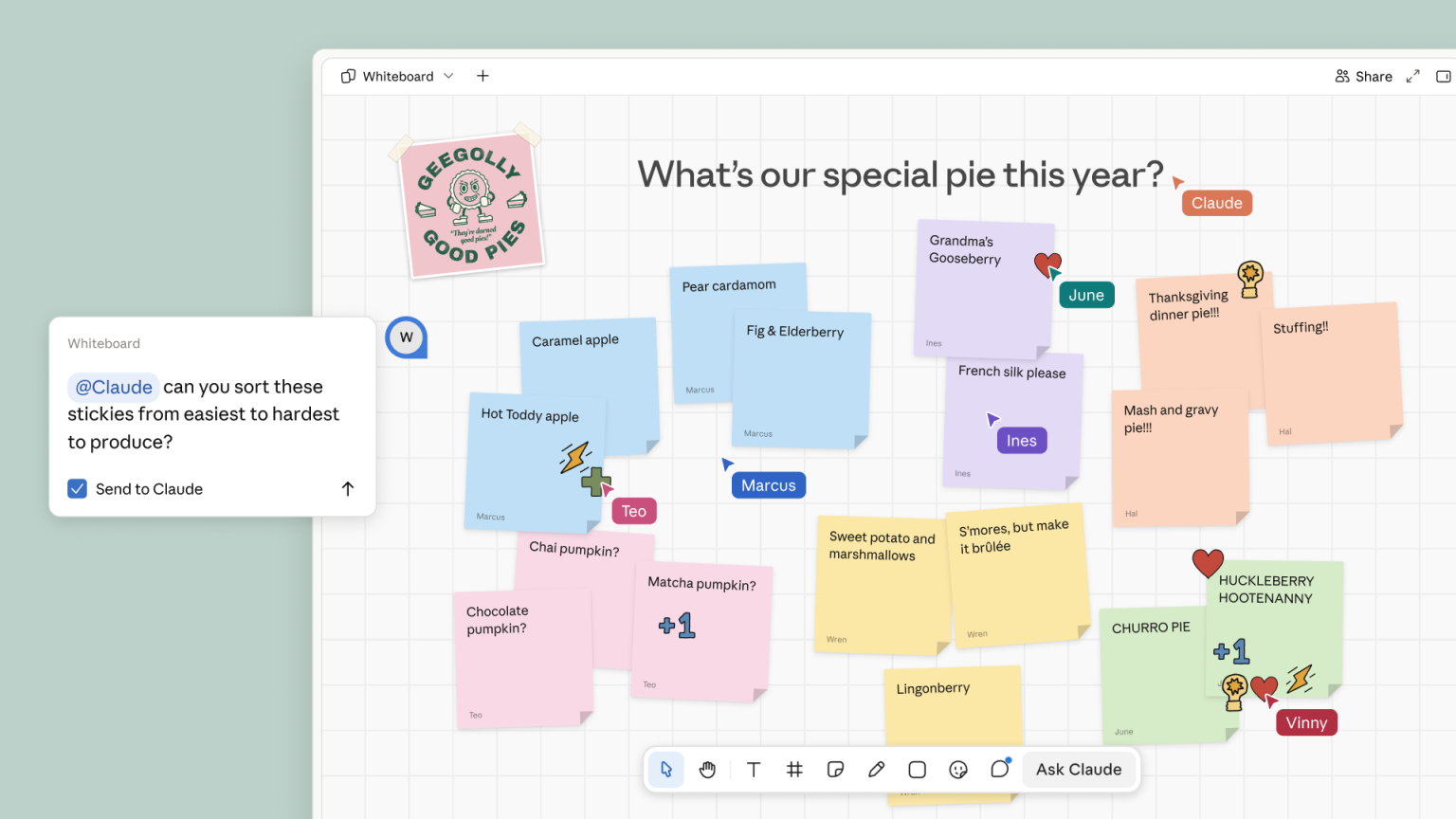
Anthropic says the feature addresses a common limitation of AI-assisted brainstorming: users can generate ideas through a chatbot but often need separate software to organize and share the results with colleagues.
Claude Sheets extends the same collaborative approach to spreadsheets. Users can describe a task, such as creating a marketing campaign tracker or preparing a hiring budget, and Claude generates a spreadsheet that the team can continue editing.
The spreadsheets support multiple worksheets, formulas, formatting and dropdown menus. Claude can modify individual cells alongside users and provide explanations of its changes, giving teams visibility into how the information is being updated.
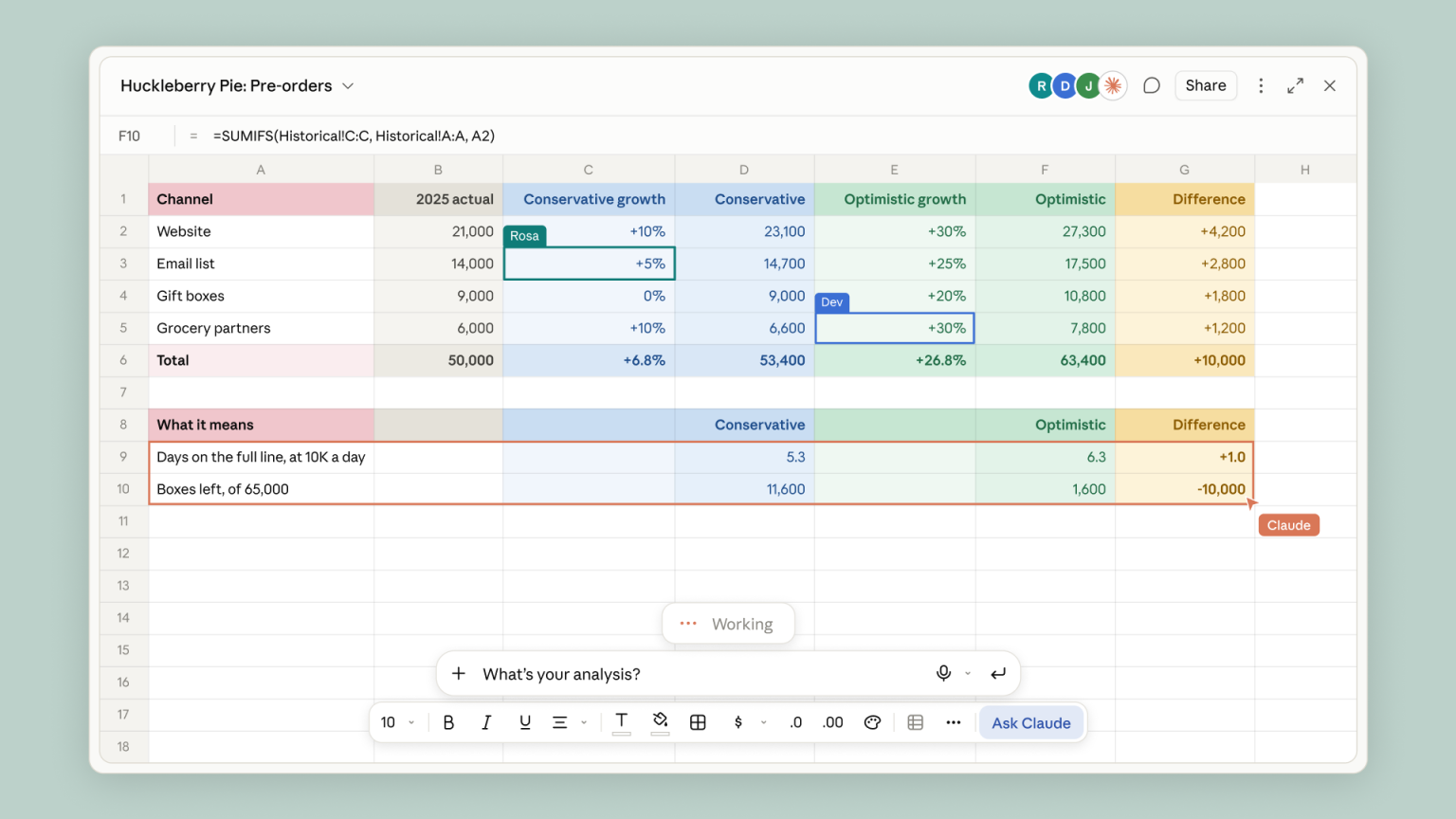
Both Claude Whiteboards and Claude Sheets are available in beta across web, desktop and mobile for subscribers on paid plans.
Anthropic is also making Claude Data generally available to paid users following an October beta period. Previously called Claude Dashboards, the feature connects to business information systems, including customer relationship management platforms and data warehouses.
Users can ask questions about connected information and receive results presented as interactive dashboards, written analyses or narrated videos. The feature expands Claude's role in business reporting by allowing users to explore company data through conversational requests.
Another part of the announcement focuses on integrations with existing workplace software. Anthropic is introducing interactive connectors that allow applications from companies including Adobe, Atlassian and HubSpot to open directly within Claude.
Rather than simply retrieving information from those services, users can interact with their applications alongside a Claude conversation. Examples include working with Adobe's PDF editor or managing marketing campaigns through HubSpot.
Anthropic's marketplace now includes more than 9,000 plugin options, reflecting its effort to connect Claude with a broader range of professional tools.
Nicholas Lin, who works on product at Anthropic, told The Verge that the company is looking to bring the productivity gains associated with Claude Code to employees outside software development. He acknowledged that “there’s still a lot of friction” when nontechnical workers attempt to incorporate AI into their daily responsibilities.
The new features arrive as competition intensifies among AI companies developing tools for office productivity. OpenAI recently introduced workplace capabilities that allow ChatGPT users to collaborate on presentations and business data visualizations, while Meta has expanded its Muse assistant with tools for generating task-specific applications.
Microsoft and Google are also developing AI capabilities within their established workplace software, including meeting assistance and document creation.
Anthropic's latest releases move Claude further into those workflows, combining meeting participation, collaborative planning, spreadsheet editing and business data analysis within a single environment.
The announcement also comes ahead of Anthropic's planned stock market debut. The company recently outlined an IPO price range of $70 to $78 per share, with trading expected to begin November 19 under the ticker ANT.
As Anthropic prepares to enter the public market, the new workplace tools provide another example of its efforts to expand Claude beyond software development and into enterprise productivity.
For businesses evaluating the new features, several practical questions remain unanswered, including how accurately Claude handles rapidly changing discussions and what information is retained from meetings. Anthropic has not provided detailed answers to those questions in the available launch reporting.
With Claude Meetings, Whiteboards and Sheets, the company is introducing a more collaborative approach to workplace AI, allowing users to move from conversation to planning and execution without waiting until a meeting or brainstorming session has ended.
This analysis is based on reporting from SQ Magazine & the tech buzz.
Images courtesy of Anthropic.
This article was generated with AI assistance and reviewed for accuracy and quality.
