The feature addresses a long-standing complaint among Spotify users: algorithmic recommendations that become trapped in repetitive loops. A single out-of-character listening session — such as a temporary playlist for workouts or a curiosity click on a trending track — can influence recommendations for weeks. By allowing listeners to manually adjust their taste profile, Spotify aims to give users a way to correct those distortions rather than waiting for the algorithm to gradually recalibrate.
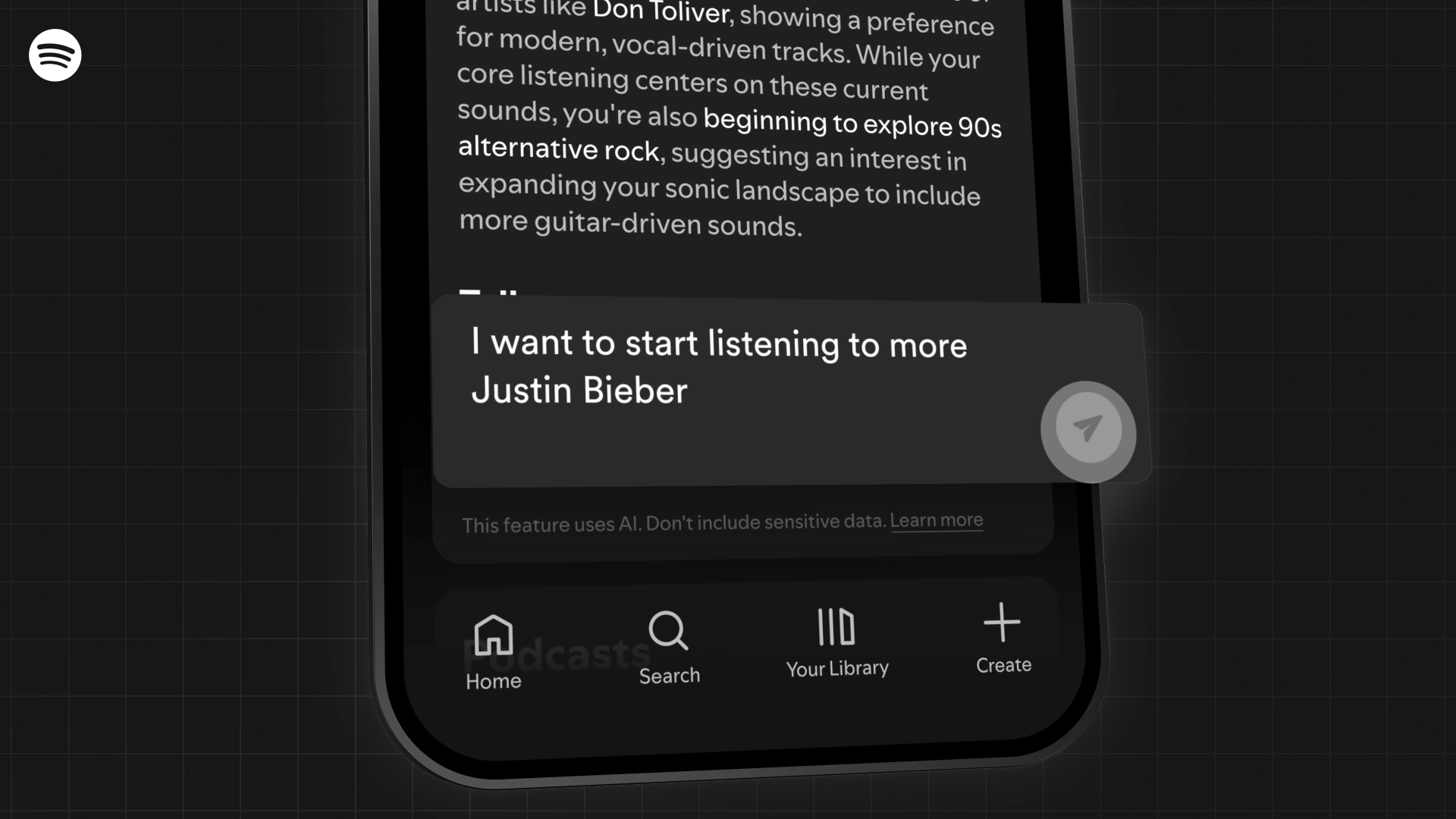
Spotify’s recommendation system is built on machine learning models that analyze massive volumes of listening activity across the platform. These models attempt to predict what a listener will enjoy based on patterns observed among similar users. While this approach often surfaces new music effectively, it can struggle to distinguish between genuine interest and occasional listening habits. The Taste Profile editor provides a mechanism for users to clarify that difference.
The company’s decision to introduce manual controls also positions Spotify differently from some of its streaming rivals. Competitors like Apple Music and YouTube Music typically depend on passive signals from listening behavior to guide recommendations. Spotify’s approach adds a layer of user input on top of algorithmic analysis, blending machine learning with direct listener feedback.
Beyond improving recommendations, the feature may also play a role in maintaining engagement. Personalized playlists have become a central part of Spotify’s listening experience, and refining how those lists are generated could help keep users active on the platform. The editor also affects Wrapped, the company’s widely shared annual listening summary, giving users some ability to influence how their listening history is reflected in that report.
Spotify has not yet outlined the full range of customization options available through the Taste Profile editor. Details about how granular the controls will be — such as whether users can fine-tune subgenres or block certain categories entirely — remain unclear.
The company typically previews new features at industry events before rolling them out broadly, suggesting the editor could launch in stages before reaching all subscribers.
With the Taste Profile editor, Spotify is experimenting with a more transparent approach to personalization. Instead of leaving recommendations entirely to machine learning systems, the company is giving listeners tools to guide how the algorithm interprets their taste — a change that could reshape how streaming platforms balance automation with user control.
This analysis is based on reporting from techbuzz.
Images courtesy of Spotify.
This article was generated with AI assistance and reviewed for accuracy and quality.
