The system uses conversational input to assemble playlists without requiring users to search for specific titles. Prompts can surface a mix of content—from interviews to deep dives—based on themes, topics, or formats, reflecting an effort to make podcast navigation more intuitive and less dependent on manual browsing.
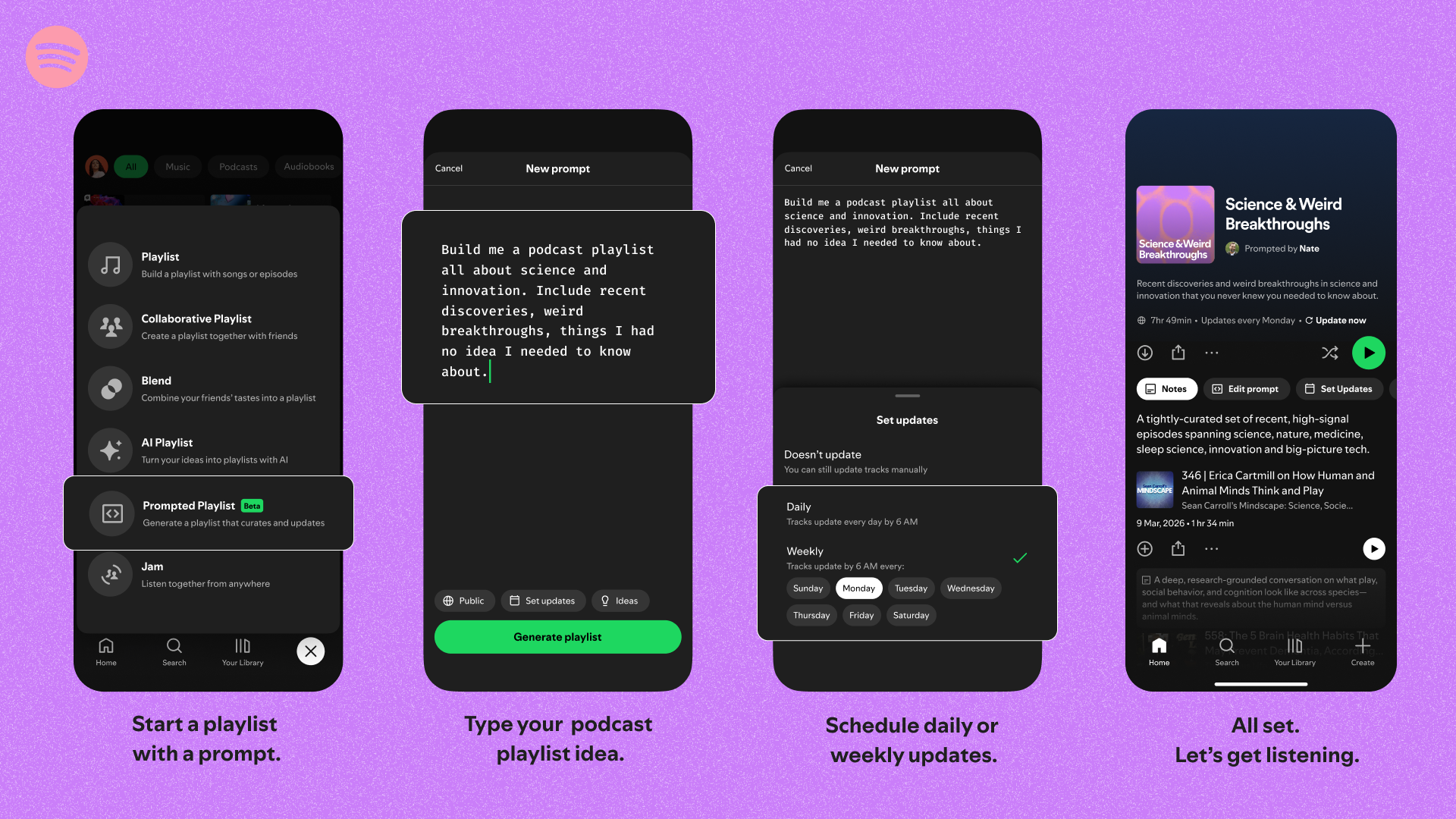
Spotify is positioning the feature as a way to address a longstanding challenge in podcasting: helping users find relevant content within a rapidly expanding library. Traditional discovery tools such as charts, categories, and search have struggled to keep pace with the volume of shows, making it harder for listeners to explore beyond familiar titles.
The technology builds on the company’s earlier work in AI-driven music playlists, which analyze listening behavior, metadata, and user preferences to interpret intent. Applying the same approach to podcasts required adapting the system to understand longer-form audio, including subject matter, structure, and format differences between episodes.
The move also aligns with Spotify’s broader strategy to increase engagement within its platform. By automatically serving a continuous stream of relevant episodes, the company aims to keep users listening for longer periods, a key factor in supporting its growing advertising business tied to podcasts.
The rollout comes as competition intensifies across audio platforms. While other services continue to rely on editorial curation or traditional recommendation systems, Spotify is leaning more heavily into automation to shape how users discover content.
The feature is being released globally and does not require a premium subscription, signaling an effort to drive widespread adoption and gather more user input to refine the system.
This analysis is based on reporting from techbuzz.
Images courtesy of Spotify.
This article was generated with AI assistance and reviewed for accuracy and quality.
