Among the updates is Ask Pinterest, a limited-access experimental application that allows the company to test conversational, visual-first shopping experiences outside of its core platform. The standalone app is built around Pinterest’s Taste Graph and is intended to provide users with personalized recommendations and inspiration through natural-language interactions. Pinterest said the app will serve as a testing ground for future AI-powered shopping experiences while helping the company learn from user behavior.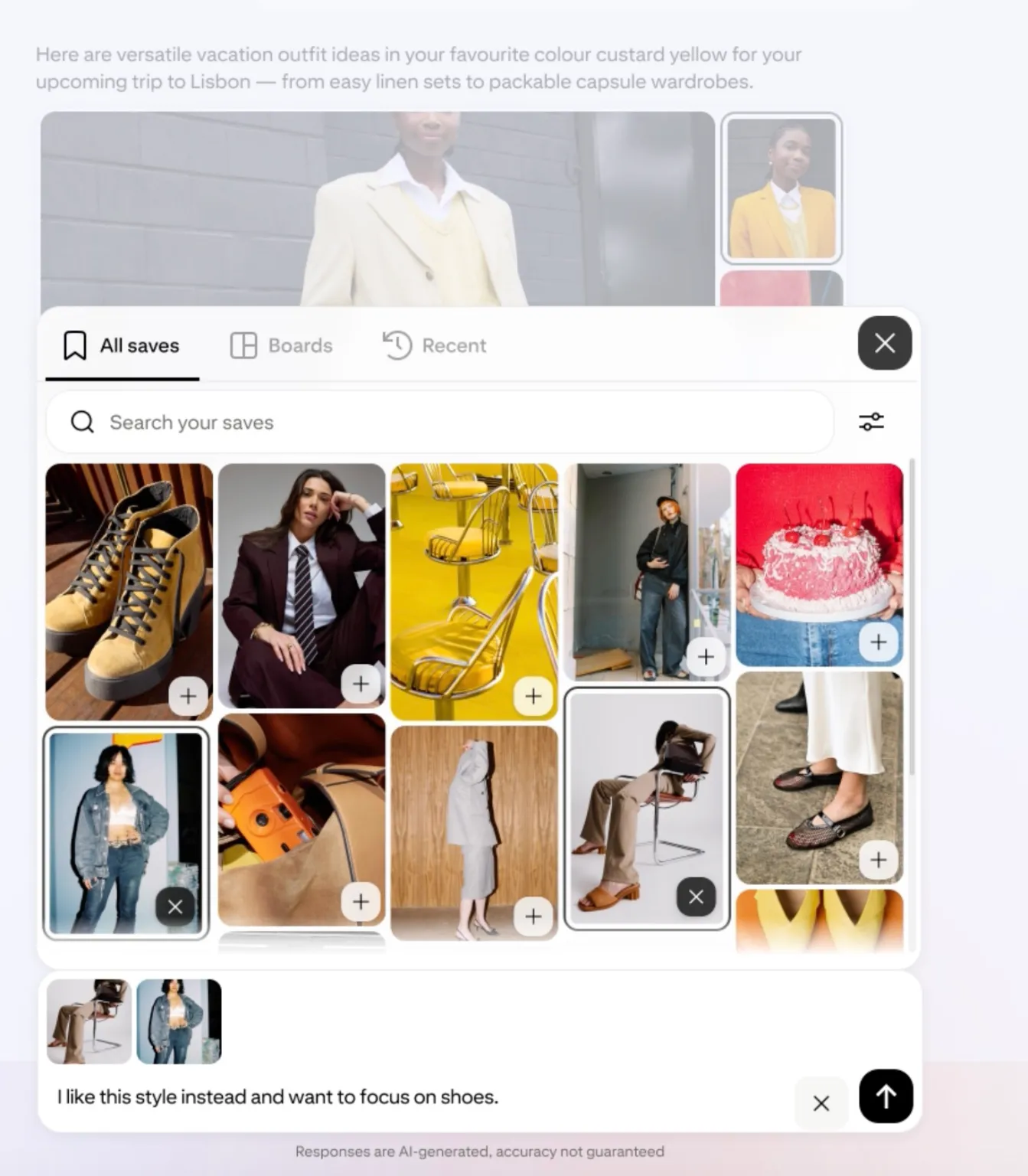
Pinterest is also introducing Business Assistant, an AI-powered tool currently in closed beta in the U.S. that is available within Ads Manager and on mobile devices. The assistant is designed to help advertisers interpret platform data, identify emerging trends, and uncover optimization opportunities. Rather than relying primarily on text-based responses, the tool presents information visually through charts, trend data, and examples of relevant Pins.
According to Pinterest, Business Assistant combines knowledge of an advertiser’s business with insights from activity on the platform. Mobile support adds proactive notifications related to trends, campaign performance, and potential improvements.
For advertisers and marketing partners using external AI systems, Pinterest is launching Pinterest MCP, an infrastructure layer built on the Model Context Protocol standard. The company said the offering provides secure access to campaign, analytics, and keyword data while enabling AI copilots and agentic tools to incorporate Pinterest-specific insights into existing workflows.
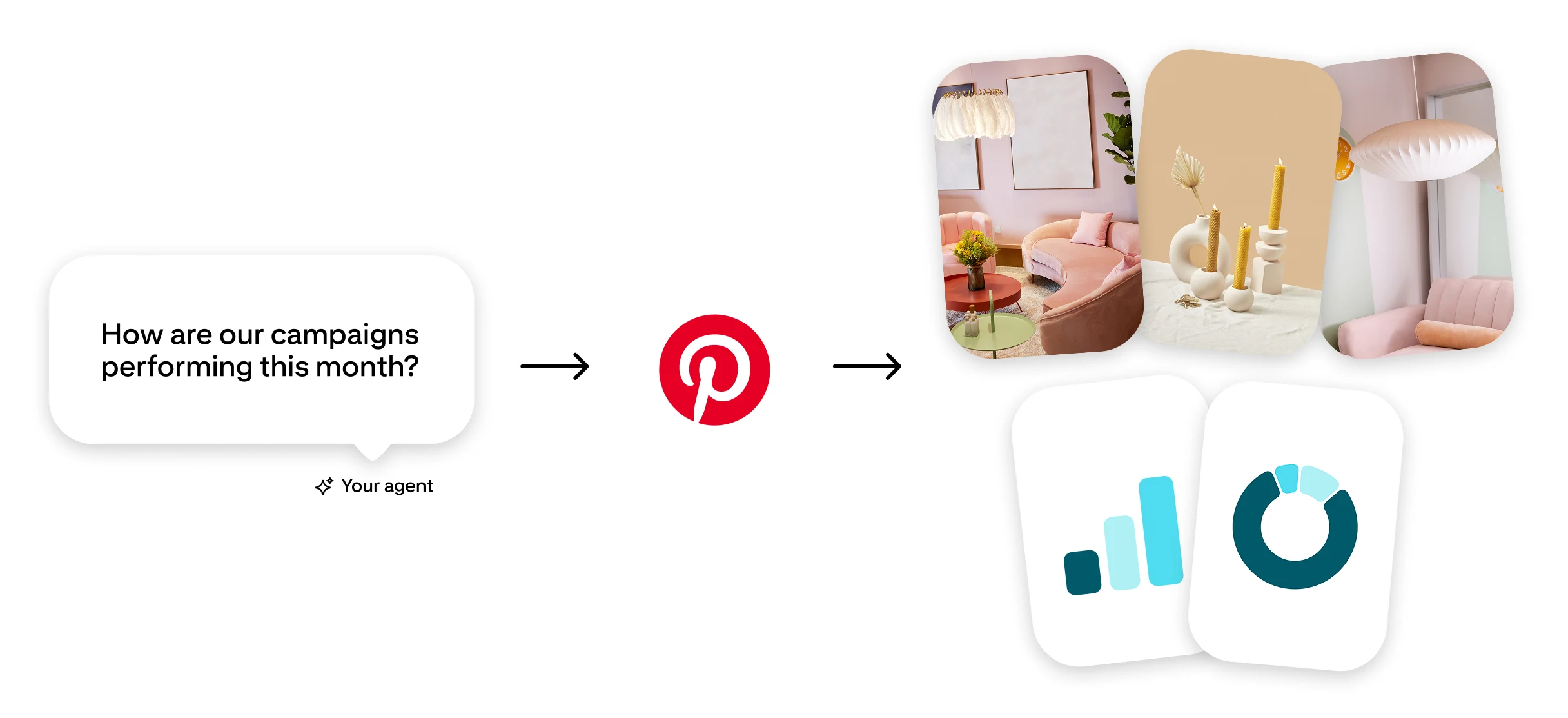
Pinterest said it is developing the protocol alongside partners including PMG, Pacvue, Dentsu, Havas, Innovid by Mediaocean, and Omnicom’s Jump450. The company said partner feedback is helping shape capabilities across reporting, campaign planning, analysis, and execution.
“Pinterest MCP helps us integrate Pinterest directly into the workflows our teams are already building, making it easier to analyze performance, uncover insights and act on opportunities without switching tools,” said Chris Ivey, President of Jump 450. “What makes Pinterest especially compelling is the strength of its intent signals. People come to Pinterest to plan what they want to do next, creating valuable context that helps marketers make smarter decisions.”
Pinterest is also expanding its Performance+ advertising suite with a new AI model focused on creative selection. The model evaluates multiple creative variations and determines which version is most likely to perform for a given ad impression. The company said the approach shifts optimization from selecting among ads to selecting among individual creative assets.

In testing, Pinterest said the new model increased click volume by 7.5% compared with its previous single-variant approach. The update is being paired with new ad review tools and expanded creative reporting features intended to provide advertisers with greater visibility into how their content is displayed and performs.
Commenting on the company’s broader strategy, Pinterest Chief Business Officer Lee Brown said, “The future of discovery won’t be driven by keywords alone. It will be shaped by context, taste, and trusted recommendations. Pinterest has a unique advantage because people come to our platform to plan, curate and take action on what they want to do next. We’re building AI experiences and infrastructure that tap into those signals in more useful and relevant ways.”
Together, the announcements position Pinterest’s latest AI efforts across both sides of its business: consumer-facing discovery experiences and advertiser-focused tools designed to improve campaign management, creative performance, and workflow integration.
This analysis is based on reporting from Pinterest.
Images courtesy of Pinterest.
This article was generated with AI assistance and reviewed for accuracy and quality.
