Honeyjar is built to automate parts of that work while preserving human control over what ultimately gets sent or published. The platform can draft outreach, build media lists, monitor news and social activity, track coverage and surface communications opportunities.
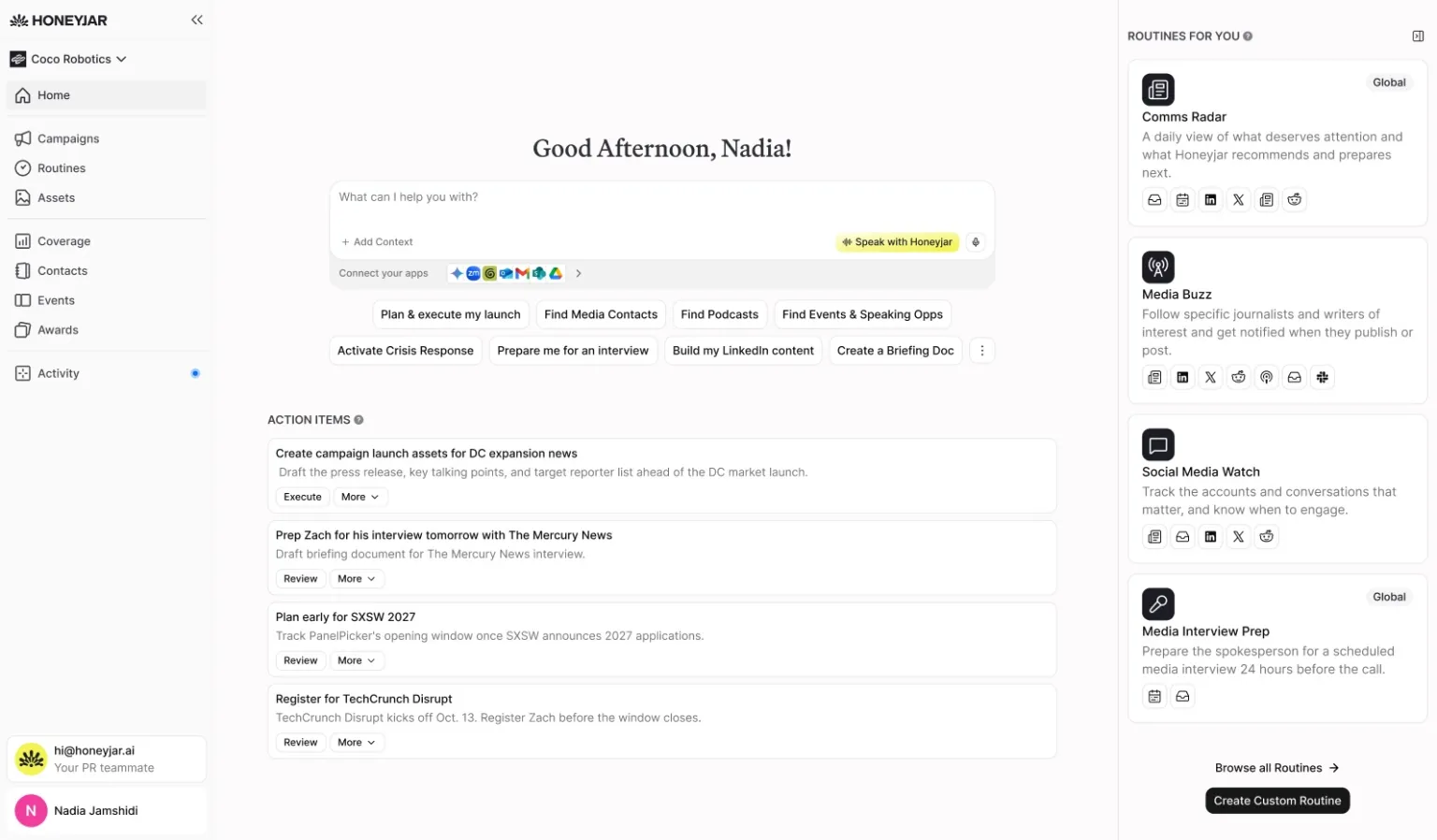
“Honeyjar can find reporters, build media lists, scan news and social, track coverage, and surface opportunities,” Jamshidi said. “Those capabilities are important, but they’re just one piece of what we’re building. The bigger idea is bringing the whole communications workflow together: signals, context, strategy, judgment, timing, and execution.”
The founders say the product is intended for a broader group than traditional PR teams. Masek pointed to marketers, investors, authors, creators, school administrators and sports organizations as examples of people who may be responsible for communications without holding a dedicated communications title.
“They don’t have the title of comms, but they’re marketers, investors, authors, creators, school superintendents, sports team leaders,” Masek said. “It’s incredibly horizontal, this need to nail strategic communications. It’s always passed around, but the problems are very often not solved.”
Honeyjar is also being positioned as a tool for communications professionals rather than a replacement for them. Masek said the platform was designed around workflows she and Jamshidi would use themselves, with the goal of helping agencies and in-house teams manage more work without adding equivalent staffing.
The company says its waitlist drew 10,000 signups in its first 24 hours. Beta testers include Nextdoor, Coco Robotics, Bloomberg Beta, Mission North and Full Picture.
One area the founders are emphasizing is human oversight. Honeyjar can generate a pitch email or social post in a user’s voice, but the user must still decide whether to send or publish it.
“We never want a world where the human is removed from the loop,” Masek said.
Honeyjar is also trying to build professional judgment into the system. Through an initiative called the Comms Lab, the company is training the product using input from additional PR professionals.
“For us, judgment is knowing what to do, what not to do, when to act, and how to adapt to the situation,” Jamshidi said. “That comes from understanding a company’s goals and priorities, what’s happening inside and outside the organization, and knowing what to say, to whom, where, and when.”
That approach can also mean advising users not to pursue media coverage. Masek said Honeyjar may tell a founder they are not ready to pitch reporters, rather than simply generating outreach for every situation.
“We hear from reporters all the time who want better pitches, who want to hear from experts directly,” she said. “We actually see a future where there are more credible pitches in your inbox from sources who you actually want to hear from.”
This analysis is based on reporting from TechCrunch.
Images courtesy of Honeyjar.
This article was generated with AI assistance and reviewed for accuracy and quality.
