Google has opened pre-orders for Googlebook, its new $899-and-up laptop category built around Gemini and deeper integration with Android phones. First unveiled in May, the devices combine an Android-based software foundation with desktop elements from ChromeOS and introduce AI features including Magic Pointer, Rambler and Create My Widget.
The first Googlebook models are being made by Acer, ASUS, Dell, HP and Lenovo. They will reach stores starting October 4 in the U.S., followed by Canada, the U.K., Ireland, France, Germany and Australia on October 5.
Google is positioning Googlebook above its traditional Chromebook lineup, with hardware that includes aluminum, magnesium alloy and carbon-fiber construction. Configurations will offer touchscreens with up to 2.8K OLED resolution, haptic glass trackpads and backlit keyboards, along with Intel or Qualcomm processors and dedicated NPUs capable of more than 45 TOPS. Google says battery life can reach 14 hours.
The larger difference is the software. Googlebook is designed around Gemini Intelligence, putting AI directly into common desktop interactions rather than requiring users to open a separate service.
Magic Pointer connects Gemini with whatever is currently visible on screen. Users can bring up Gemini through the cursor and ask it to work with content already displayed, such as reorganizing a calendar or translating text. Google says the feature only activates when requested and can be disabled.
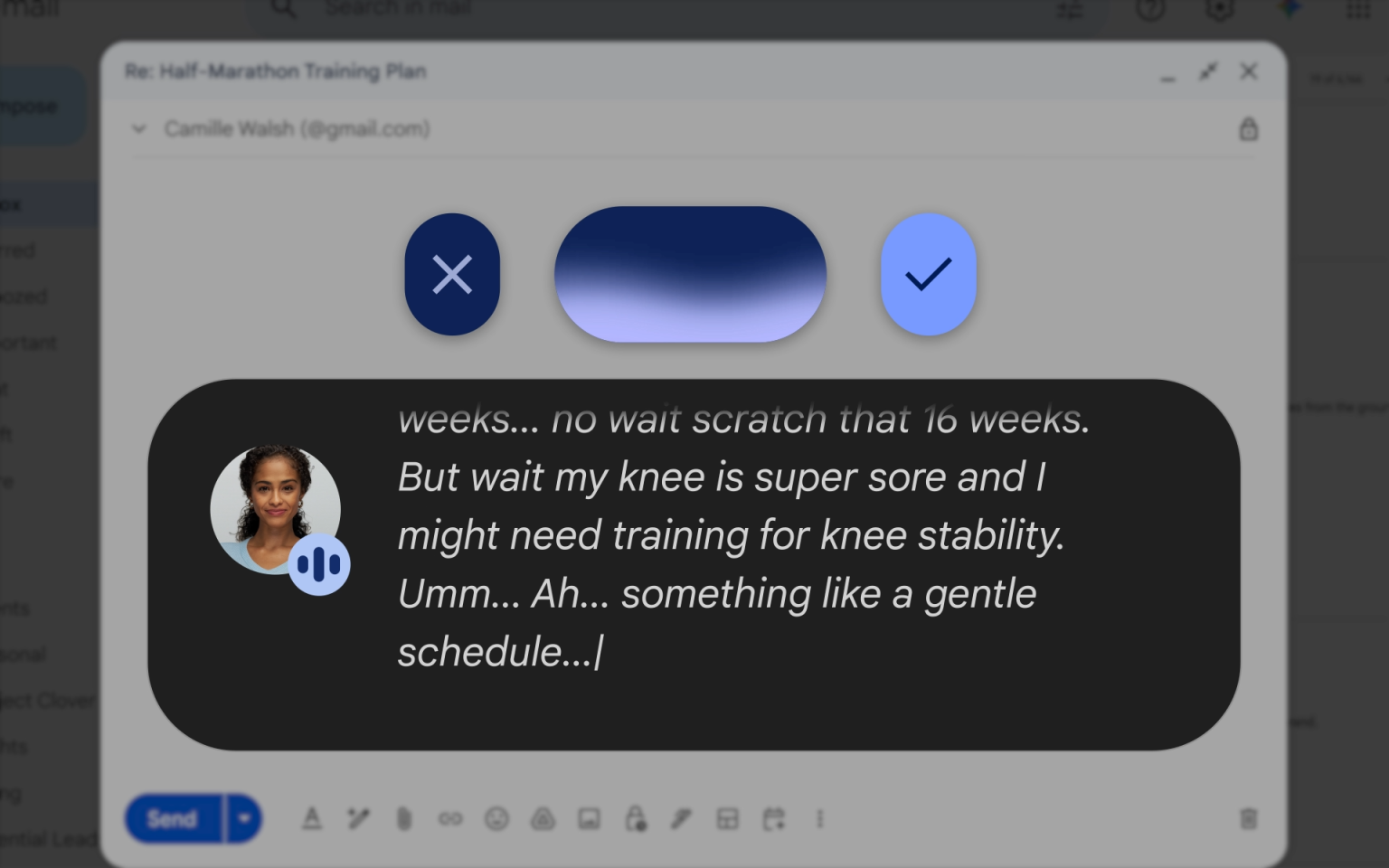
Rambler takes a different approach by focusing on voice input. Users can speak through notes, action items or loosely organized thoughts, and the system converts them into structured writing with elements such as headers, checklists and formatted takeaways. The feature also supports multiple languages.
Create My Widget lets users describe a desktop widget in everyday language and have the system generate it. Google is also including Gemini Spark and Gemini Live among the AI experiences available on the laptops.
The company is tying Googlebook closely to Android phones. During setup, users can transfer settings, saved passwords, Wi-Fi networks and messages from their phone, with the data protected by end-to-end encryption.
Continue On allows work started on an Android phone to be resumed from the Googlebook taskbar. The Files app can surface files and photos stored on the phone, while Cast My Apps lets users interact with mobile apps inside a desktop window.
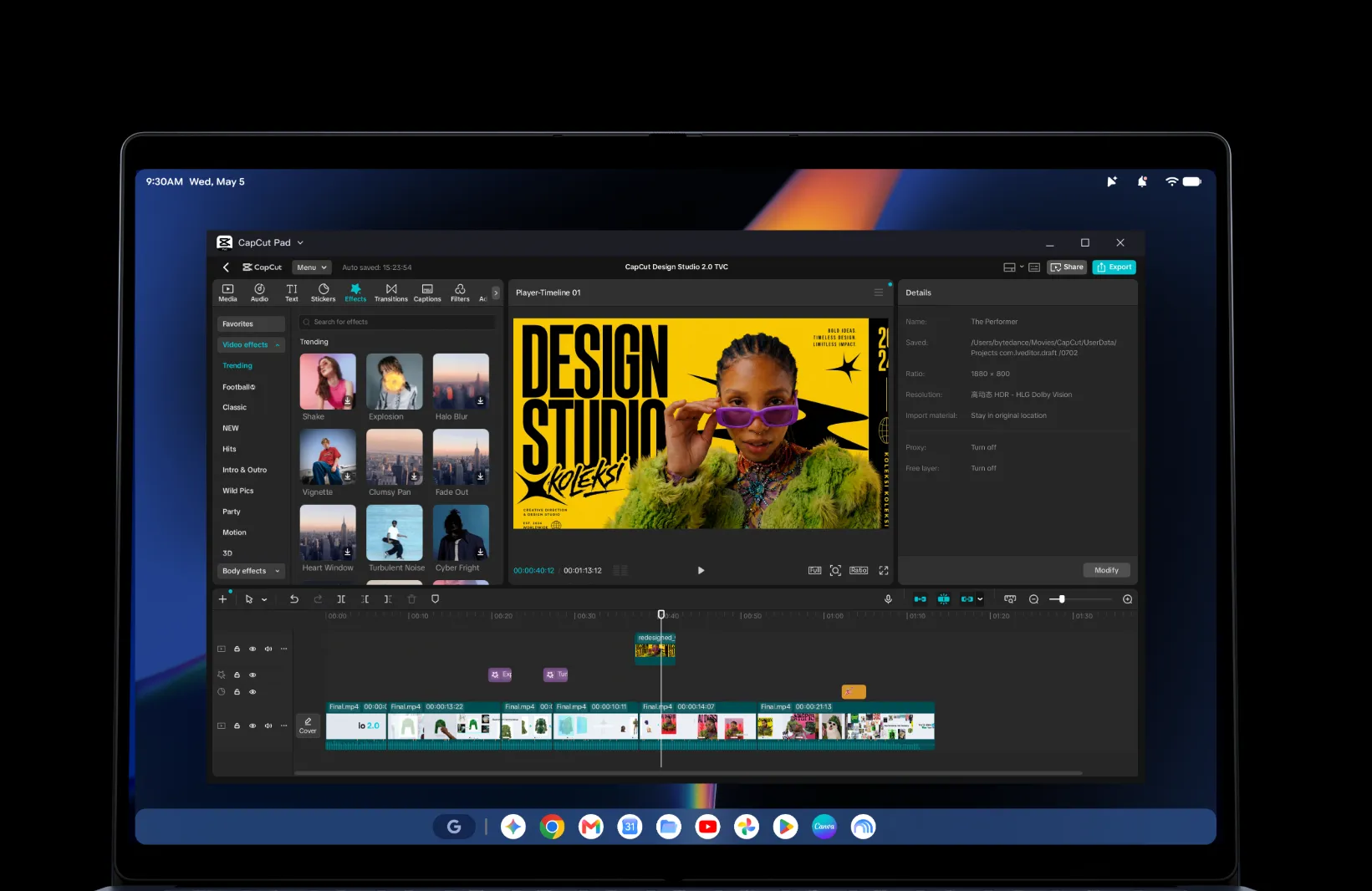
Googlebook also combines the desktop version of Chrome, including extension support, with Android applications from the Play Store. Google says native applications including Adobe Photoshop, Adobe Lightroom and CapCut will be available, alongside streaming apps that support offline viewing.
Developers get a terminal environment and access to Antigravity, Google’s AI agent development platform. The system can also run tools including Claude Code and Antigravity CLI.
Google says the laptops use the same security architecture as ChromeOS, including its Titan hardware root of trust, layered protections and on-device malware detection. Googlebook also includes a Level 5 security-certified pKVM hypervisor that runs an isolated Linux environment with full terminal access.
Another hardware detail returning with Googlebook is the Glowbar. Mounted on the outside of the laptop, it illuminates during startup, displays charging progress and responds visually when users interact with Gemini.
Every Googlebook starts at $899 and includes 12 months of Google AI Pro, which comes with 5TB of cloud storage and Gemini Advanced tools. Buyers also receive three months of YouTube Premium and Adobe Photoshop, along with a complimentary year of GeForce NOW. Google says Googlebook OS will receive regular feature releases and updates for as long as 10 years.
Google has said existing Chromebooks will continue receiving support, while many may eventually become eligible to transition to the Googlebook experience. With roughly 50 million Chromebooks used by students and educators, according to Google, the new platform also gives the company a path to bring Gemini more directly into a large base of existing laptop users.
For now, Googlebook represents Google’s attempt to make AI part of the operating experience itself. Rather than simply adding Gemini as another app, the company is embedding it into the cursor, voice input, desktop customization and connections between Android phones and laptops.
About this article: This article was generated with AI assistance and reviewed by our editorial team to ensure it follows our editorial standards for accuracy and independence. We maintain strict fact-checking protocols and cite all sources.
Word count: 696Reading time: 0 minutes
Explore More AI Resources
Continue with high-value guides related to this topic.
Join thousands of weekly readers — the latest AI news, free in your inbox.
🤖 3 times a week📊 Industry analysis💡 Breaking news
Enjoying this article?
Get a free month of ChatAI Plus or Pro
🎁 Limited time offer
🔒 Once per user
ChatAI Plus & Pro unlock multi-model chat (GPT, Claude, Gemini & more), our productivity tools, and ad-free reading. Subscribe to our newsletter and take a 2-minute survey to claim one month free — no strings attached.