Adobe said the system grounds its outputs in the uploaded materials and provides source citations for each response, allowing users to trace where information comes from. The approach is intended to keep study content tied closely to original documents rather than generating standalone answers.
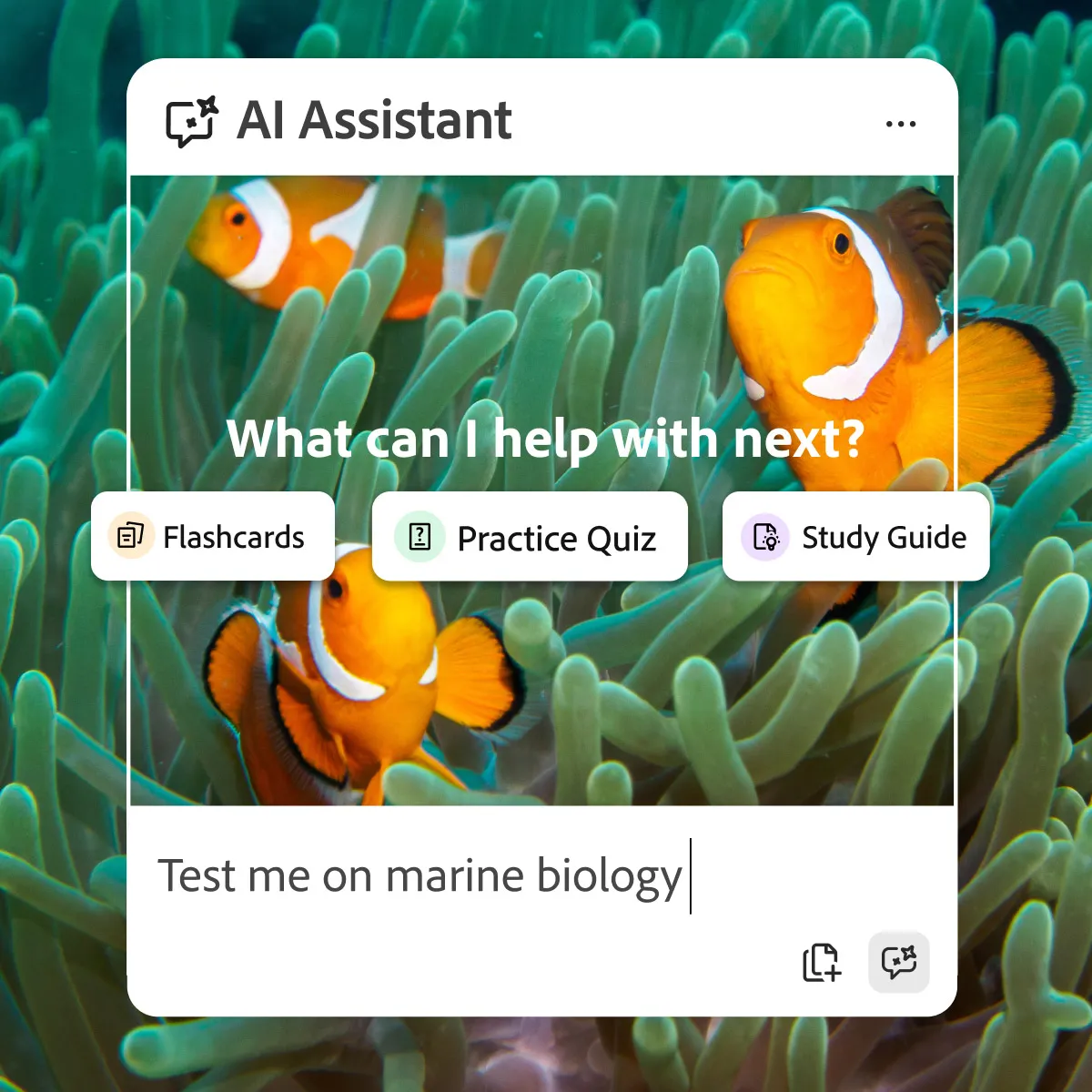
Student Spaces was developed by Adobe’s education team, led by Vice President Charlie Miller, with input from more than 500 students across six universities. The design reflects an effort to support different learning styles, offering formats suited to visual, auditory, and text-based study methods.
“As much as possible, we do want to be agnostic to the type of learning or the type of content,” Miller said in an interview with CNET.
The platform also includes sharing features, allowing students to distribute materials through services like Discord, WhatsApp, and GroupMe, or send individual study tools such as quizzes without sharing full projects. Adobe said the goal is to combine multiple study functions in a single place while enabling collaboration.
The launch comes as AI tools become more common in education, raising concerns about misuse in academic work. Adobe positions Student Spaces as a tool that encourages interaction with material rather than producing finished assignments, focusing on structured study outputs instead of full essays.
Student Spaces is available for free in its beta phase. Users without direct Acrobat access may be able to use it through university-provided Creative Cloud subscriptions or discounted student plans.
This analysis is based on reporting from CNET.
Images courtesy of Adobe.
This article was generated with AI assistance and reviewed for accuracy and quality.
