YouTube uses large language models to interpret those requests. A prompt can combine several interests, add constraints such as video length, or ask for a particular mood or style. The system can also suggest ways to narrow or expand the request.
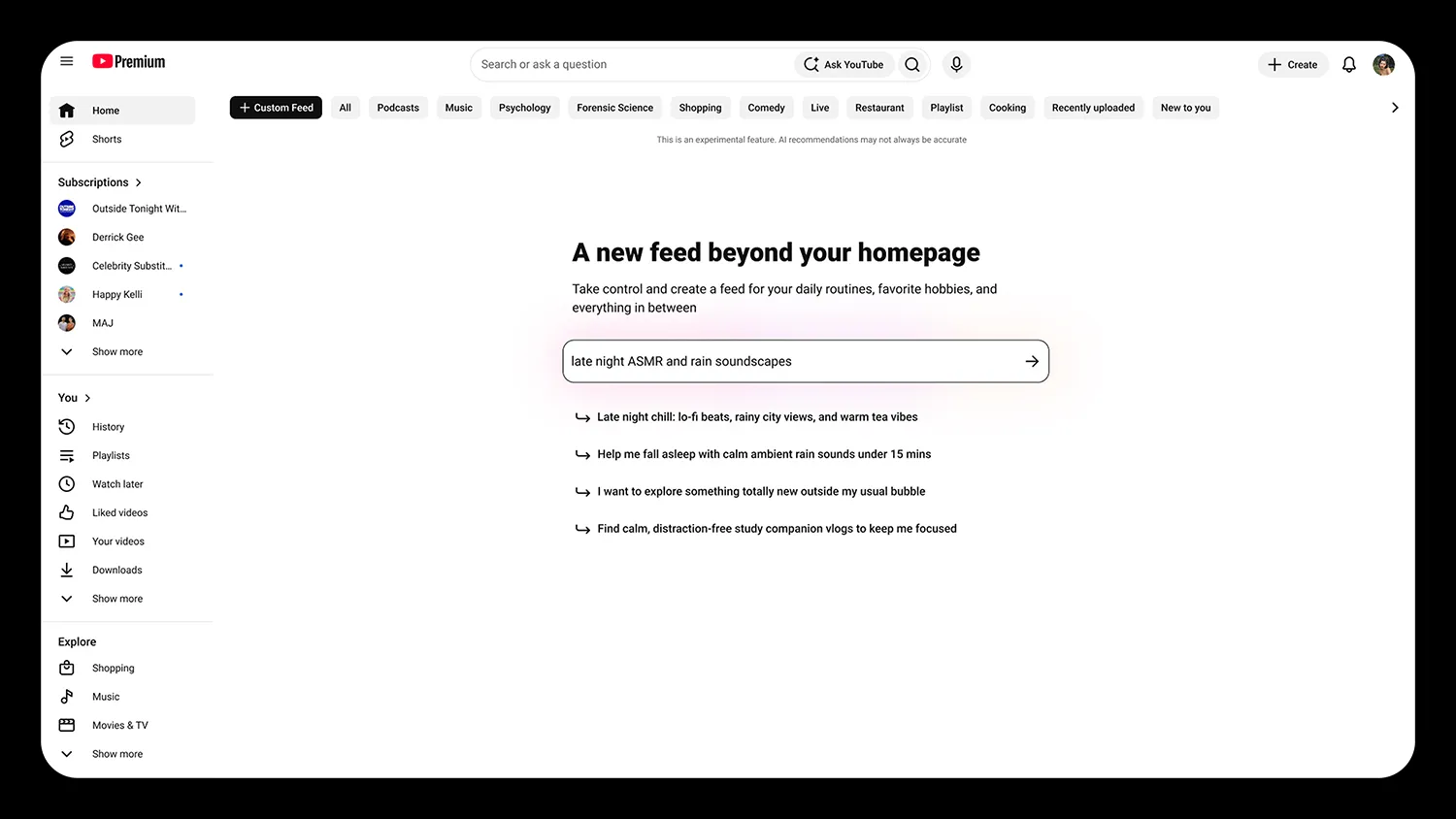
For example, a user could ask for videos covering several unrelated topics in one feed or request content with conditions such as recent uploads or no spoken commentary. YouTube then creates a dedicated recommendation stream around those instructions.
The new feeds appear alongside existing topic tabs such as Music and Podcasts. Users can save multiple Custom Feeds and return to their regular homepage at any time by selecting the All tab.
Emily Moxley, YouTube’s vice president of product management, said the feature responds to requests for more influence over recommendations. “Users are always telling us that they want more control,” Moxley said. “They want more ability to steer their algorithm. With custom feeds, we're giving them a natural-language way that they can do that. They can tell us exactly what they want.”
YouTube tested Custom Feeds experimentally earlier this year before deciding to expand access. The company had also explored a more direct system for changing a user’s overall recommendation algorithm but chose not to release it. “We found users were nervous and afraid to do that,” Moxley said. “They were worried about messing it up.”
Custom Feeds takes a less permanent approach. Rather than rewriting the recommendation history that powers a user’s main homepage, it gives viewers separate spaces where they can experiment with different interests without affecting the default feed.
The feature is particularly suited to requests that would be difficult to handle through a conventional search. Instead of entering one topic and browsing individual results, users can describe a combination of subjects, formats, lengths, or preferences and receive an ongoing feed based on that mix.
YouTube also announced an expansion of Ask YouTube, its AI-assisted search feature introduced earlier this year. The tool can answer more detailed questions about videos and is gaining additional capabilities for product research.
For product searches, Ask YouTube can pull information from videos and outside sources and organize the results into formats such as comparison tables. Users can then open a surfaced video and continue asking questions from its watch page.
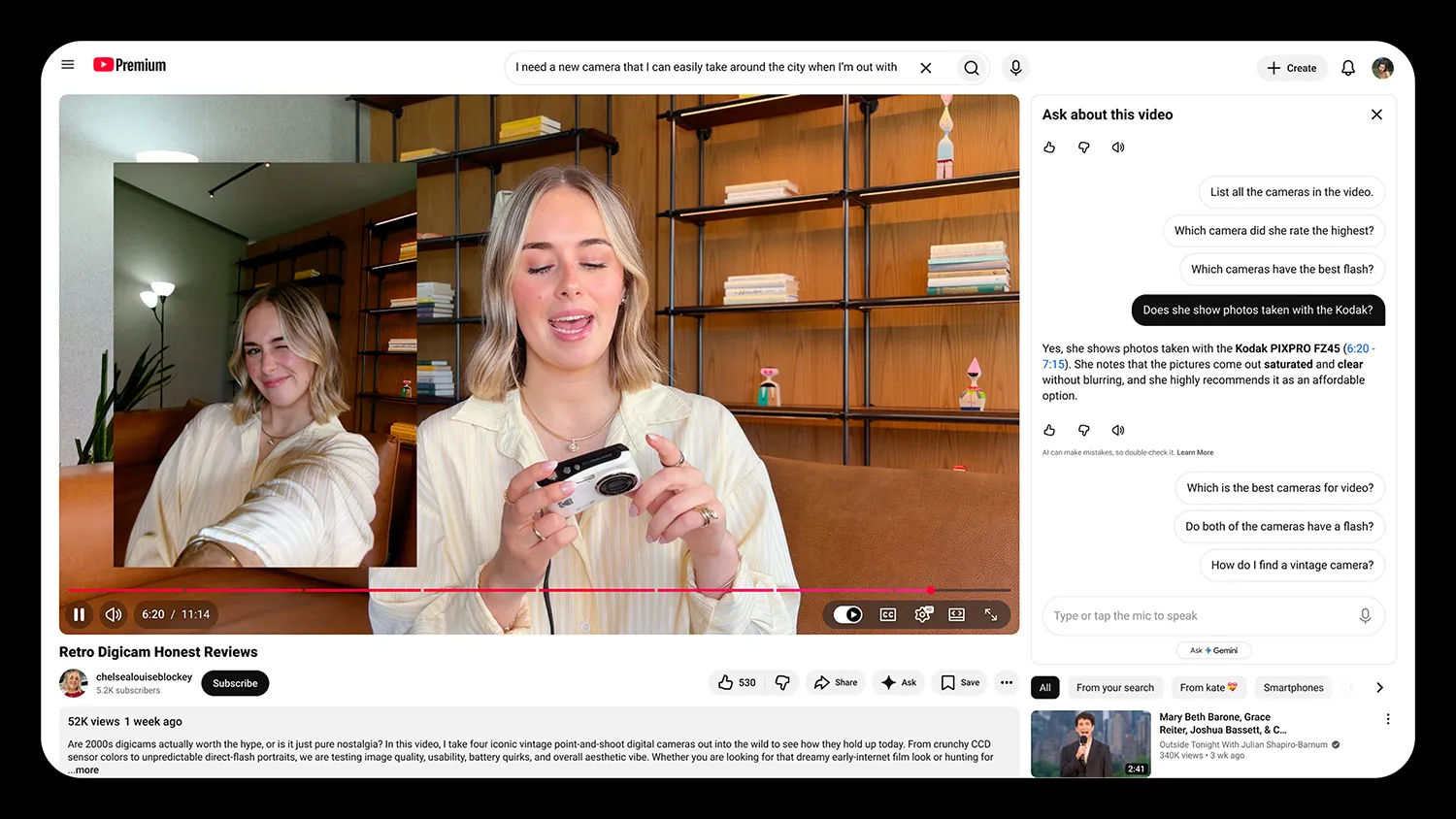
A YouTube spokesperson said the company expects the feature to help people reach relevant videos more quickly rather than reduce viewing. “Our goal is to connect viewers with the right video faster. With Ask YouTube, we expect watch time to remain steady or improve,” the spokesperson said.
YouTube is also extending generative AI into creator tools. The company is adding Gemini assistance to Shorts and the YouTube Create app, while introducing other features including Shorts series, personalized thumbnail and preview testing, and live auto dubbing beginning with English and Spanish.
Custom Feeds, however, changes the viewer side of the experience by giving people a way to explicitly tell YouTube what kind of recommendation feed they want at a particular moment.
Instead of replacing the recommendation system YouTube has built from years of viewing behavior, the feature adds another layer on top of it. Users can keep their existing homepage intact while creating separate feeds that respond to more specific instructions.
This analysis is based on reporting from CNET.
Images courtesy of YouTube.
This article was generated with AI assistance and reviewed for accuracy and quality.
