OpenAI Launches Native macOS App for Codex With Multi-Agent Coding Workflows

AI News Hub Editorial
Senior AI Reporter
February 2nd, 2026
OpenAI Launches Native macOS App for Codex With Multi-Agent Coding Workflows

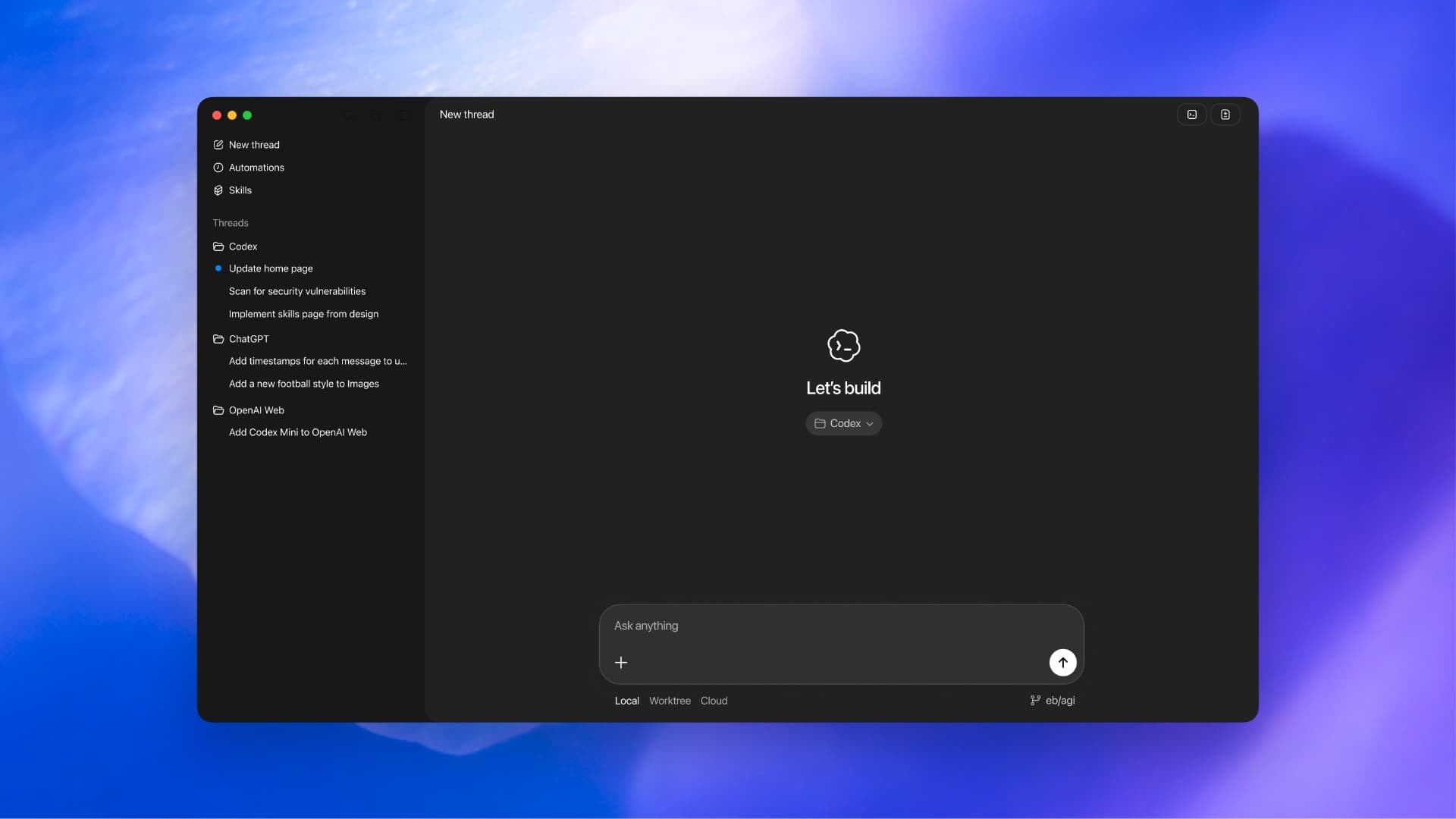
OpenAI has launched a native macOS app for Codex, giving developers a new way to use its AI coding agent with multi-agent workflows designed to run tasks in parallel. The app, released Monday, is OpenAI’s latest push to make Codex easier to use beyond the command line, arriving less than two months after the company introduced GPT-5.2-Codex, its most powerful coding model to date.

The new app reflects how quickly the market for “agentic” coding tools is evolving. Instead of limiting AI assistance to autocomplete or single-shot code generation, products like Anthropic’s Claude Code and Cowork have popularized systems where multiple agents can break down larger programming jobs and work independently. OpenAI is now bringing those same practices into a dedicated desktop experience.

Codex first launched as a command-line tool last April, followed by a web interface a month later. But competitors have been moving toward more polished native environments, and OpenAI’s macOS release is a clear attempt to close that gap by embedding agent workflows directly into a developer’s daily setup.

The app is built around parallel agent execution, allowing developers to queue up work that can run in the background and return completed tasks for review. OpenAI is betting that the combination of GPT-5.2-Codex’s model strength and a more flexible interface will make Codex more compelling for developers who have gravitated toward rival tools.

The timing also highlights the intensifying competition in AI coding assistants. GitHub Copilot remains the dominant player by usage, but the race is shifting toward systems that can handle more autonomous, multi-step work. OpenAI’s move into a native macOS app signals that the battle for developer mindshare is no longer just about model performance, but about workflow, control, and how seamlessly AI agents fit into real software projects.

This analysis is based on reporting from techbuzz.

Image courtesy of OpenAI.

This article was generated with AI assistance and reviewed for accuracy and quality.

Last updated: February 2nd, 2026

About this article: This article was generated with AI assistance and reviewed by our editorial team to ensure it follows our editorial standards for accuracy and independence. We maintain strict fact-checking protocols and cite all sources.

Word count: 319Reading time: 0 minutesLast fact-check: February 2nd, 2026

AI Tools for this Article

📧 Stay Updated

Get the latest AI news delivered to your inbox every morning.

Browse All Articles
Share this article:
Next Article