The new experience is available through a dedicated “Finances” section inside ChatGPT on web and iOS. Users can also initiate setup by prompting ChatGPT to connect their accounts. OpenAI says the system currently supports more than 12,000 financial institutions through Plaid, with Intuit integration planned for later.
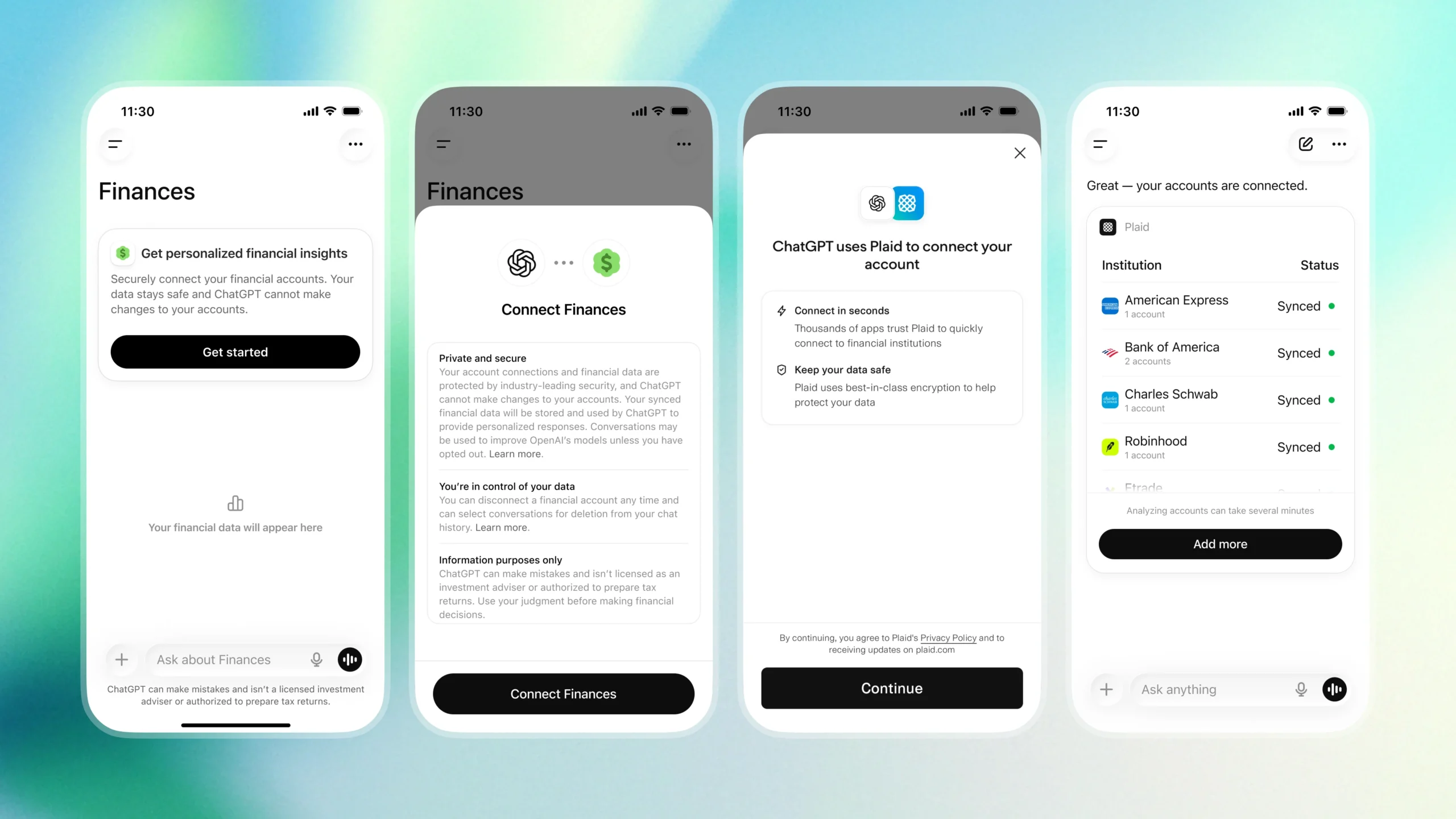
Once connected, ChatGPT generates a financial dashboard that surfaces portfolio performance, recurring subscriptions, upcoming payments, spending trends, and other account activity. Users can then ask questions tied to their actual financial situation, such as building a savings plan, analyzing spending habits, or evaluating long-term goals like buying a home or paying down debt.
OpenAI says the feature is powered by GPT-5.5 Thinking by default, its latest reasoning-focused model. The company claims more than 200 million people already use ChatGPT monthly for budgeting, investment questions, and financial planning, but until now the chatbot could only provide generalized guidance without direct access to personal financial context.
The company is positioning the feature as a way to combine conversational AI with personalized financial data rather than replacing financial advisors outright. OpenAI repeatedly notes that ChatGPT “is not a replacement for professional financial advice,” a distinction that reflects the regulatory complexity surrounding AI-generated financial guidance.
The rollout strategy also appears deliberately cautious. OpenAI is limiting access to Pro users in the U.S. first, describing the launch as a preview intended to gather real-world feedback before broader expansion. The company says it eventually plans to bring the experience to Plus users and later to wider audiences.
Privacy and data handling are central to the launch. OpenAI says ChatGPT can access balances, transactions, liabilities, and investment information through connected accounts, but cannot view full account numbers or make direct account changes. Users can disconnect accounts at any time, and OpenAI says synced account data will be deleted from its systems within 30 days after removal.
The company also introduced a new category of “financial memories,” allowing ChatGPT to retain user-provided context such as savings goals, debts, or planned purchases to improve future financial conversations. Users can review or delete those memories directly from the Finances section.
The broader significance of the launch extends beyond budgeting tools. OpenAI is effectively positioning ChatGPT as a centralized interface for managing financial decisions, combining conversational AI with transaction-level financial data. That creates a potentially powerful network effect: the more users rely on ChatGPT for financial planning, the more personalized and context-aware the system becomes over time.
The move also places OpenAI more directly in competition with fintech platforms, digital financial advisors, and budgeting apps that have historically owned this category. Traditional wealth management firms and fintech startups have spent years building tools around customer spending data and financial insights. ChatGPT’s advantage is that it already operates as a widely used consumer interface with high engagement frequency.
OpenAI hinted at even broader ambitions around financial actions and services. The company said it is working with partners including Intuit on future experiences that could allow users to move from financial questions directly into actions like applying for credit cards, estimating taxes, or connecting with financial professionals from within ChatGPT itself.
The launch arrives as AI companies increasingly shift focus toward specialized, high-value use cases rather than general-purpose chatbot interactions alone. Personal finance represents one of the clearest examples of that trend: a category where users interact frequently, provide sensitive data, and potentially make major financial decisions based on AI-generated guidance.
Whether users fully embrace AI-powered financial planning remains an open question. Finance carries a different level of trust sensitivity than casual chatbot use, and regulators will likely scrutinize how AI systems frame recommendations, handle user data, and distinguish between informational guidance and regulated financial advice.
Still, OpenAI’s rollout signals that the company sees financial services as a major frontier for conversational AI. The company is no longer positioning ChatGPT solely as a productivity assistant or research tool. It increasingly wants the platform embedded in the systems people rely on to make important life decisions.
This analysis is based on reporting from OpenAI.
Images courtesy of OpenAI.
This article was generated with AI assistance and reviewed for accuracy and quality.
