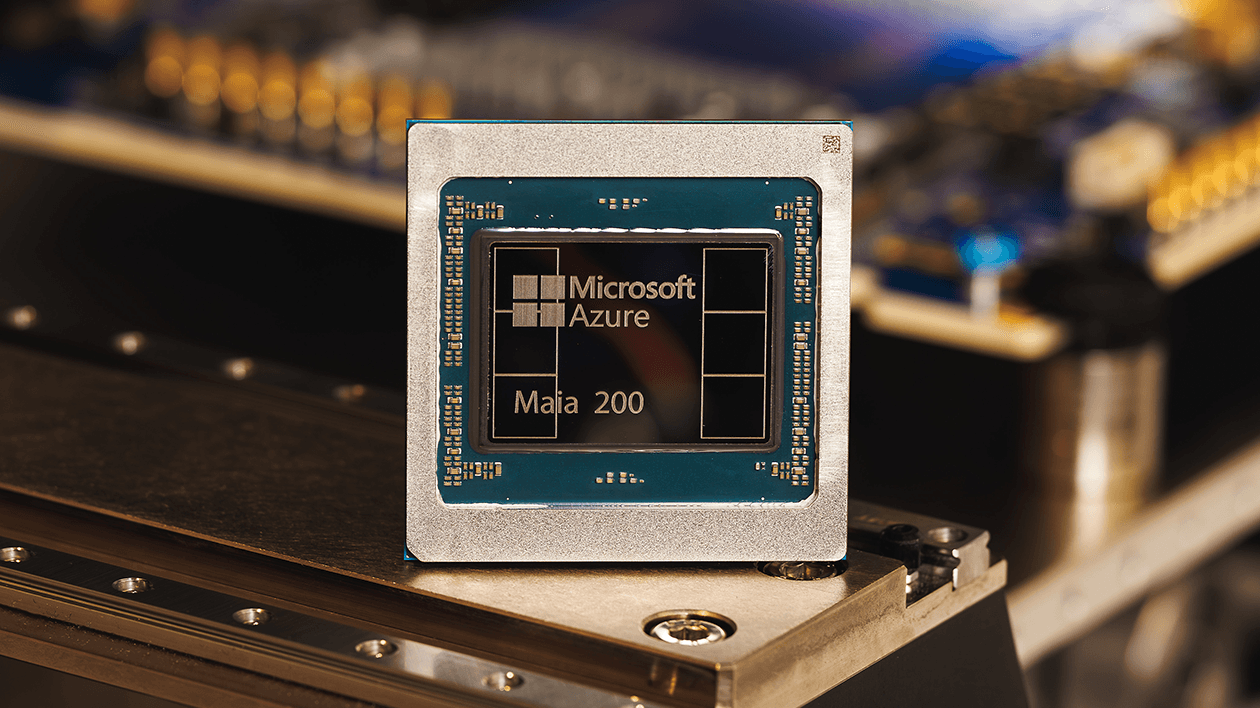
Microsoft Unveils Maia 200, Its Next-Gen Custom AI Chip

AI News Hub Editorial
Senior AI Reporter
January 26th, 2026
Microsoft Unveils Maia 200, Its Next-Gen Custom AI Chip

Microsoft’s push into custom AI chips isn’t just another “faster hardware” announcement — it’s a sign that the cloud giants are starting to treat silicon as the new battleground for the AI era. For years, companies like Microsoft, Amazon, and Google could build massive businesses on top of someone else’s chips. But AI changes that math. When the cost of running models becomes one of your biggest expenses, “good enough” hardware stops being good enough.

That’s why Microsoft’s Maia 200 matters. Not necessarily because it beats Amazon’s Trainium on one benchmark or edges out Google on another, but because it shows Microsoft is serious about owning more of the stack — from the chip, to the data center, to the models, to the products people actually use. Microsoft says Maia 200 is already powering workloads inside its Des Moines data center, and even running OpenAI’s GPT-5.2 models alongside Microsoft 365 Copilot and internal work from its Superintelligence team. That’s a pretty direct message: this isn’t a lab experiment, it’s infrastructure the company plans to scale.

What’s driving all of this is simple: AI is expensive to operate. Training a model is costly, but it’s a one-time hit. Serving it to millions of users, all day, every day, is the ongoing cost that can quietly eat margins alive. And that’s where custom chips shine. They’re not just about raw speed — they’re about performance-per-dollar, power efficiency, and tuning hardware specifically for inference (the day-to-day “running” of AI models once they’re trained).

Microsoft is also positioning Maia 200 as an alternative path away from Nvidia dependency, which is quickly becoming a shared obsession across the hyperscalers. Google has spent almost a decade refining TPUs. Amazon is already on its third generation of Trainium with a fourth announced. Microsoft got into the race later — Maia 100 only debuted in late 2023 — but it’s trying to make up for lost time by leaning into integration. The company is basically arguing: even if we started later, we can make the whole system work better together because we control the cloud, the software, and the applications people live in every day.

There’s another interesting layer here too: Microsoft isn’t keeping Maia 200 completely closed off. Alongside the chip, the company is rolling out a software development kit so startups and researchers can optimize their models for Maia hardware, with an early preview opening up now. That’s a smart move — because the real winners in custom silicon aren’t just the ones who build good chips, but the ones who build the ecosystem around them.

The big takeaway is that AI competition is shifting. It’s no longer just about who has the smartest model. It’s about who can run powerful models at scale, cheaply, and reliably — and increasingly, that comes down to who controls the chips.

This analysis is based on reporting from GeekWire.

Image courtesy of Microsoft.

This article was generated with AI assistance and reviewed for accuracy and quality.

Last updated: January 26th, 2026

About this article: This article was generated with AI assistance and reviewed by our editorial team to ensure it follows our editorial standards for accuracy and independence. We maintain strict fact-checking protocols and cite all sources.

Word count: 497Reading time: 0 minutesLast fact-check: January 26th, 2026

AI Tools for this Article

Trending Now

📧 Stay Updated

Get the latest AI news delivered to your inbox every morning.

Browse All Articles
Share this article:
Next Article