The agent runs with its own browser, file system and terminal, giving it the ability to navigate websites, write code, complete forms and carry out transactions. It can also create documents, PDFs, web pages, dashboards and other interactive outputs that Meta calls Artifacts.
Users can connect Muse to services including email, calendars, payments, health and fitness apps, smart-home systems, shopping, dining, music and events. Connections are added individually, and if a service does not have a built-in integration, Muse can use a public API when one is available or access the service through its browser.
Meta says Muse is powered by its Muse Spark family of AI models. The company is also designing the agent to retain context across conversations, allowing users to keep a main ongoing chat while creating separate side chats for more focused projects.
Proactivity is another central part of the product. Muse can send messages without being prompted when it identifies something relevant to an existing task or goal. Users can adjust how often those messages appear or turn the feature off.
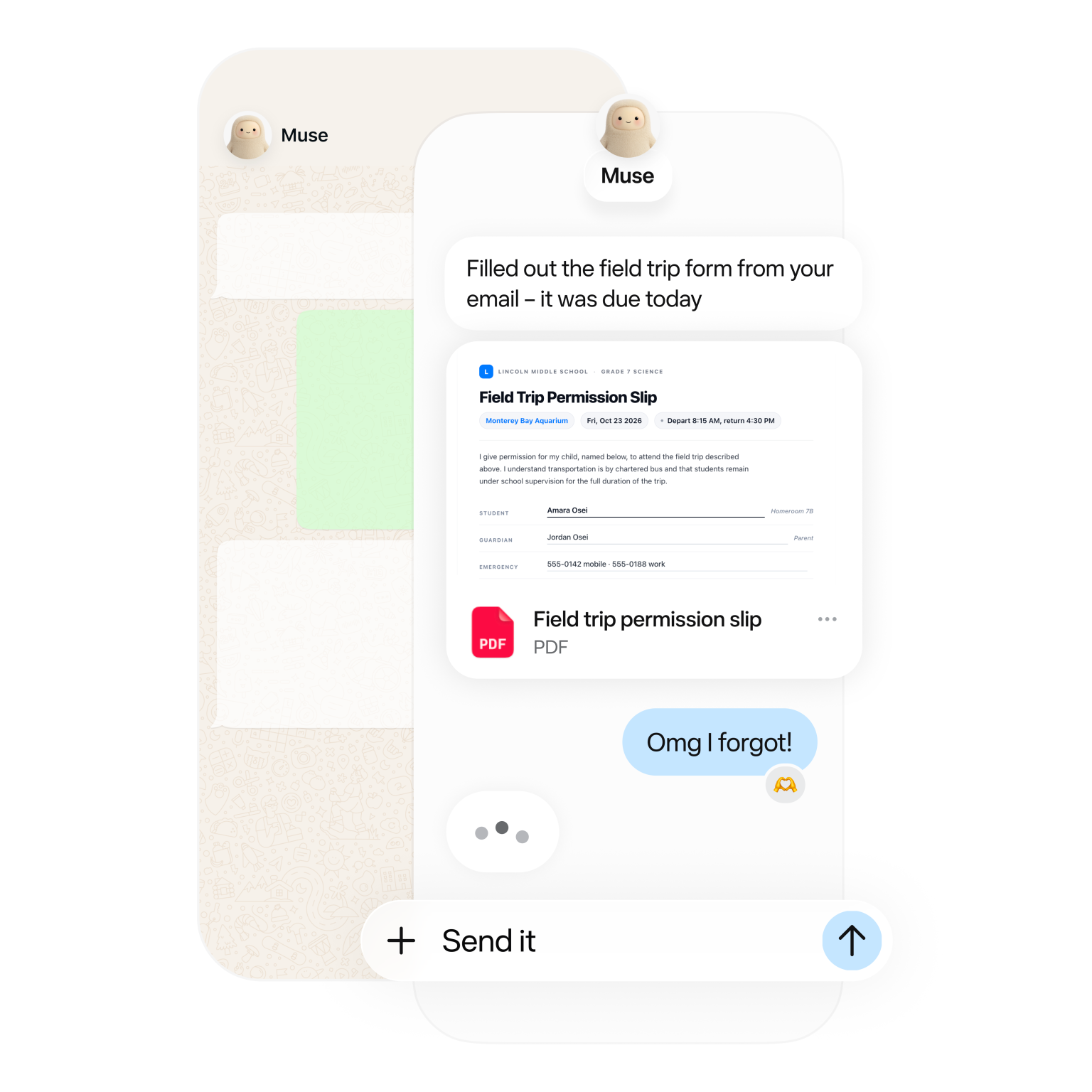
Meta is pairing those capabilities with controls for actions that are harder to reverse. Muse can browse normally on its own, but the default settings require user approval before sensitive steps such as sending an email or completing a purchase. Users can change those permission levels depending on how much autonomy they want to give the agent.
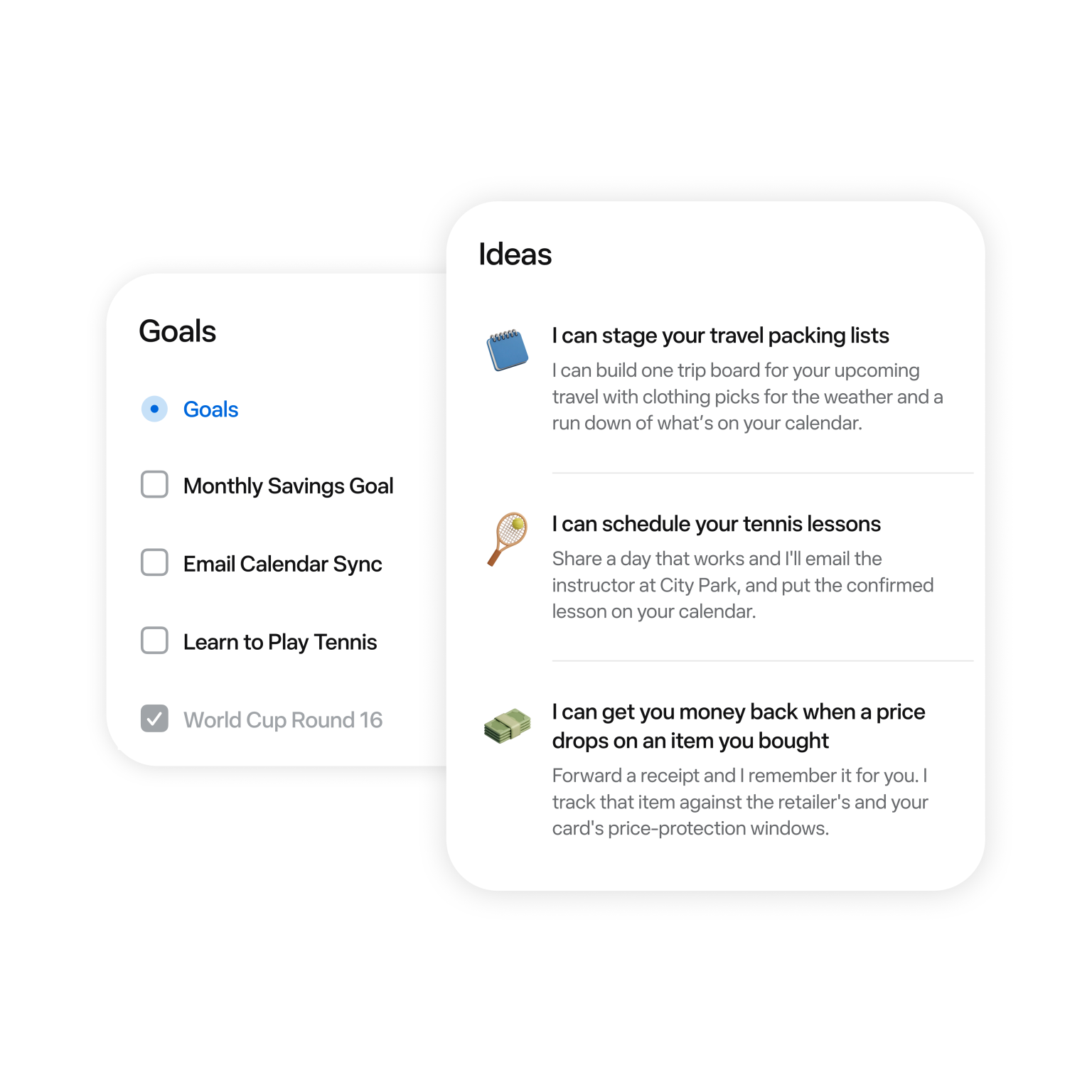
The company also provides an activity view showing what Muse is working on and the permissions it has been granted. Users can inspect and edit memory files, while a Goals section tracks longer-running tasks and the plans Muse has created to complete them.
Meta says Muse operates inside a dedicated secure computing environment with its own browser. A separate Sentinel agent runs within the same virtual machine while remaining separated from Muse at the system level. The company says Muse does not see users’ passwords or payment information and does not share conversations or user data with Meta’s advertising systems.
Muse can also be personalized with a name, avatar and communication style. Meta said that customization became an important part of the product during testing as people developed longer-running relationships with their agents.
The service includes both free and paid usage. Meta said Power will cost $20 per month and Maximum will cost $100 per month, with the paid tiers providing additional capacity for delegated tasks. The company expects many people to remain on the free tier and will show users how much usage they have remaining.
Payments can be completed through Link by Stripe, while integrations with Shopify’s Shop Pay and 1Password are planned. Meta is also exploring the possibility of generating revenue from commerce conducted through AI agents, though it has not settled on a specific model.
Muse will eventually extend to Meta’s AI glasses. The company is also making the agent available through WhatsApp, although that version will not include some app-specific features such as the feed and Ideas tools.
The launch gives Meta a consumer product built around AI agents that can act continuously across multiple services rather than waiting for individual prompts. For Muse, the central challenge will be whether users are willing to give an AI system enough access to their digital lives for those capabilities to become useful.
This analysis is based on reporting from Meta.
Images courtesy of Meta.
This article was generated with AI assistance and reviewed for accuracy and quality.
