A key feature of the model is its ability to coordinate multiple AI agents to complete tasks. In practical use, this allows the system to break down requests—such as planning a trip—into parallel workflows handled by separate agents, each responsible for different parts of the task. Meta has also built in support for tool use and persistent sessions, enabling the system to handle longer-running processes and more complex interactions.
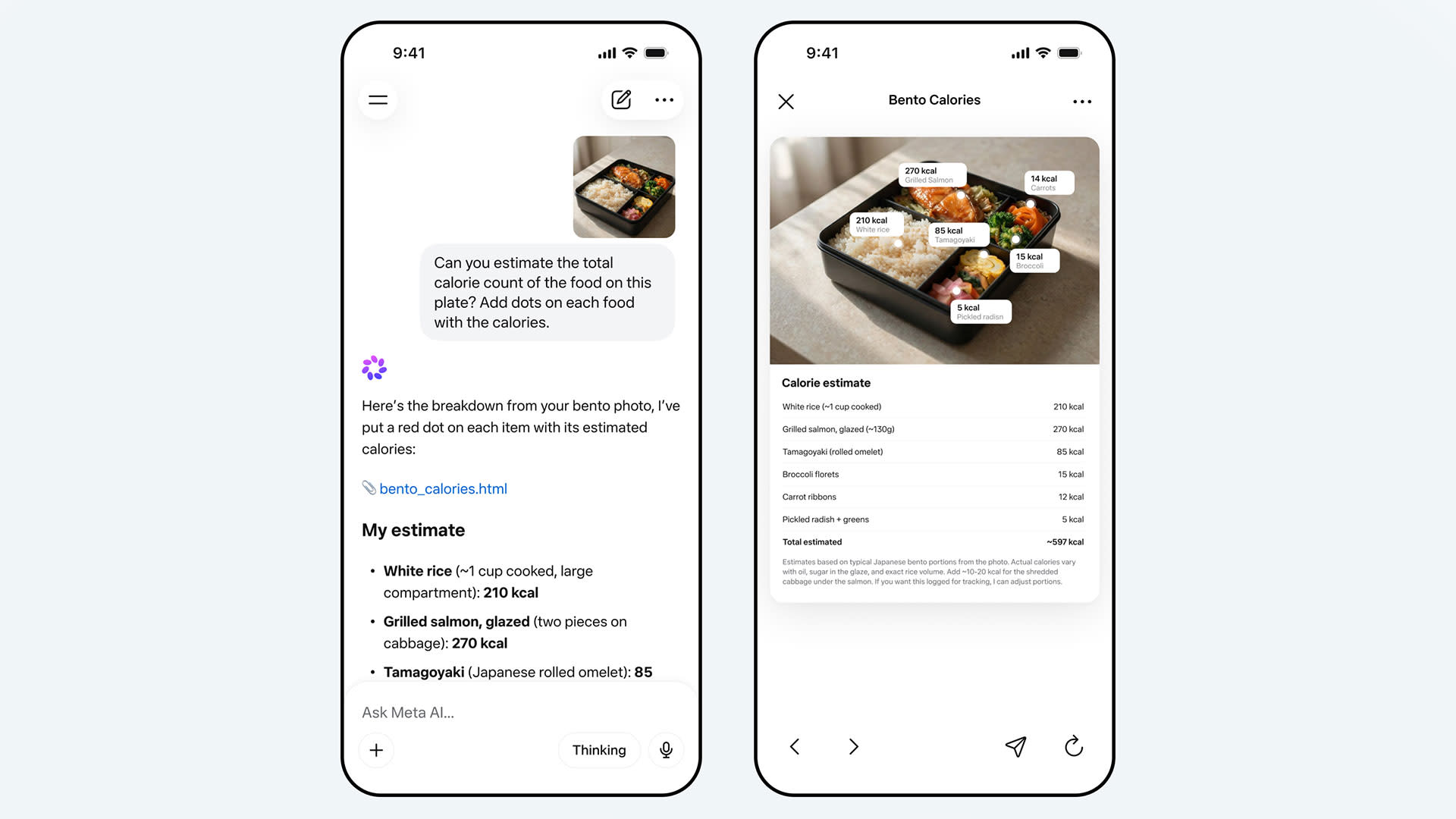
The model’s multimodal capabilities extend to real-world inputs. Users can capture images and ask questions about what they see, with the system generating contextual responses or visual annotations. Meta highlights applications ranging from everyday problem-solving—like troubleshooting household items—to more structured use cases such as generating interactive content or analyzing health-related information. To support this, the company says it worked with more than 1,000 physicians to improve the model’s responses in health contexts.
Muse Spark also includes familiar consumer features seen across competing AI systems. These include a built-in shopping assistant that compares products and links to purchase options, as well as multimodal search capabilities similar to tools like Google Lens.
Under the hood, Meta says the model reflects a broader overhaul of its AI stack, including changes to training methods, model architecture, and infrastructure. The company claims it can reach comparable performance levels using significantly less compute than earlier models, pointing to efficiency gains as it scales toward more advanced systems.
While Muse Spark is positioned as an entry point, Meta says more capable versions of the model are in development. The company also indicated it may open source future iterations, though it has not committed to a timeline.
With this release, Meta is focusing on delivering baseline capabilities in a consumer-friendly package while laying the groundwork for more advanced systems. The emphasis on multimodal reasoning, multi-agent coordination, and integrated deployment across its apps signals how the company plans to evolve its AI products in the near term.
This analysis is based on reporting from Meta and Engadget.
Images courtesy of Meta.
This article was generated with AI assistance and reviewed for accuracy and quality.
