The update also brings conversational editing to Vids. Users can describe changes they want in everyday language, including swapping a background, adjusting lighting or adding effects. Gemini Omni supports step-by-step edits, so users can keep refining a video without starting over from a new generation each time.
The personal avatar feature lets users create a digital version of themselves from a selfie and a short voice recording. After that, they can type a message and have the avatar deliver it on video without recording themselves on camera.
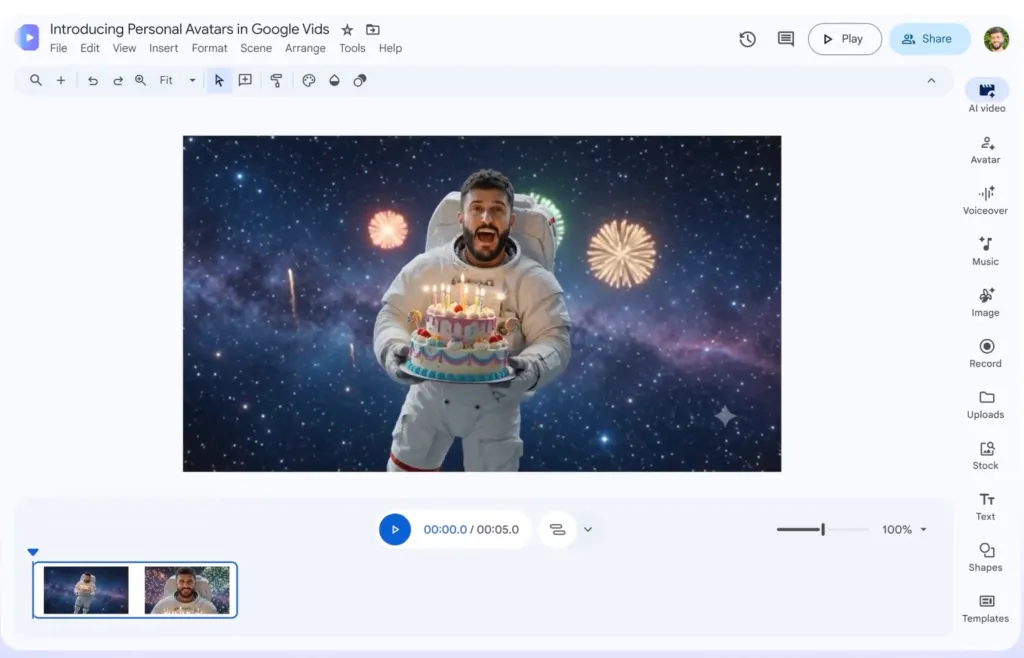
Google said personal avatars are linked to the user’s Google Account and are restricted to the account holder’s likeness. Access is limited to users in certain regions who are 18 or older.
The features are available in Google Vids for Google AI Pro and Ultra subscribers and Google Workspace business customers. That positions Vids as a more direct tool for workplace videos, internal updates, training materials and personalized messages, while also moving it closer to avatar-video products from dedicated AI video startups.
The guardrails are central to the rollout. Every generated clip includes an invisible SynthID digital watermark, which Google says can help verify that a video was created with AI. The company is also limiting personal avatars to the account holder’s own likeness, a restriction aimed at reducing impersonation risks.
The update shows Google pushing Vids beyond basic video creation into a more complete AI editing workspace. Gemini Omni handles generation and iterative changes, while personal avatars give users a way to appear in videos without filming. The test will be whether the tools are reliable enough for the business users Google is targeting and whether the account, age and watermarking limits are enough to make synthetic video acceptable inside workplace workflows.
This analysis is based on reporting from Google.
Image courtesy of Google.
This article was generated with AI assistance and reviewed for accuracy and quality.
