The new version is designed to help families keep track of information that is often scattered across different inboxes and accounts. Each member can choose what to share with CC, including individual emails, recurring messages from selected senders, files, Drive folders, calendar information and content sent through Google Chat.
Google says CC cannot freely search a family member’s inbox. Instead, users decide which messages the agent receives. They can forward one-off emails or automatically share future messages from specific senders, such as schools, sports organizations or travel companies.
Once information is shared, CC can organize it into a common view. The agent maintains a shared calendar and task list and sends members a daily “Your Day Ahead” briefing with upcoming events, responsibilities and other relevant information.
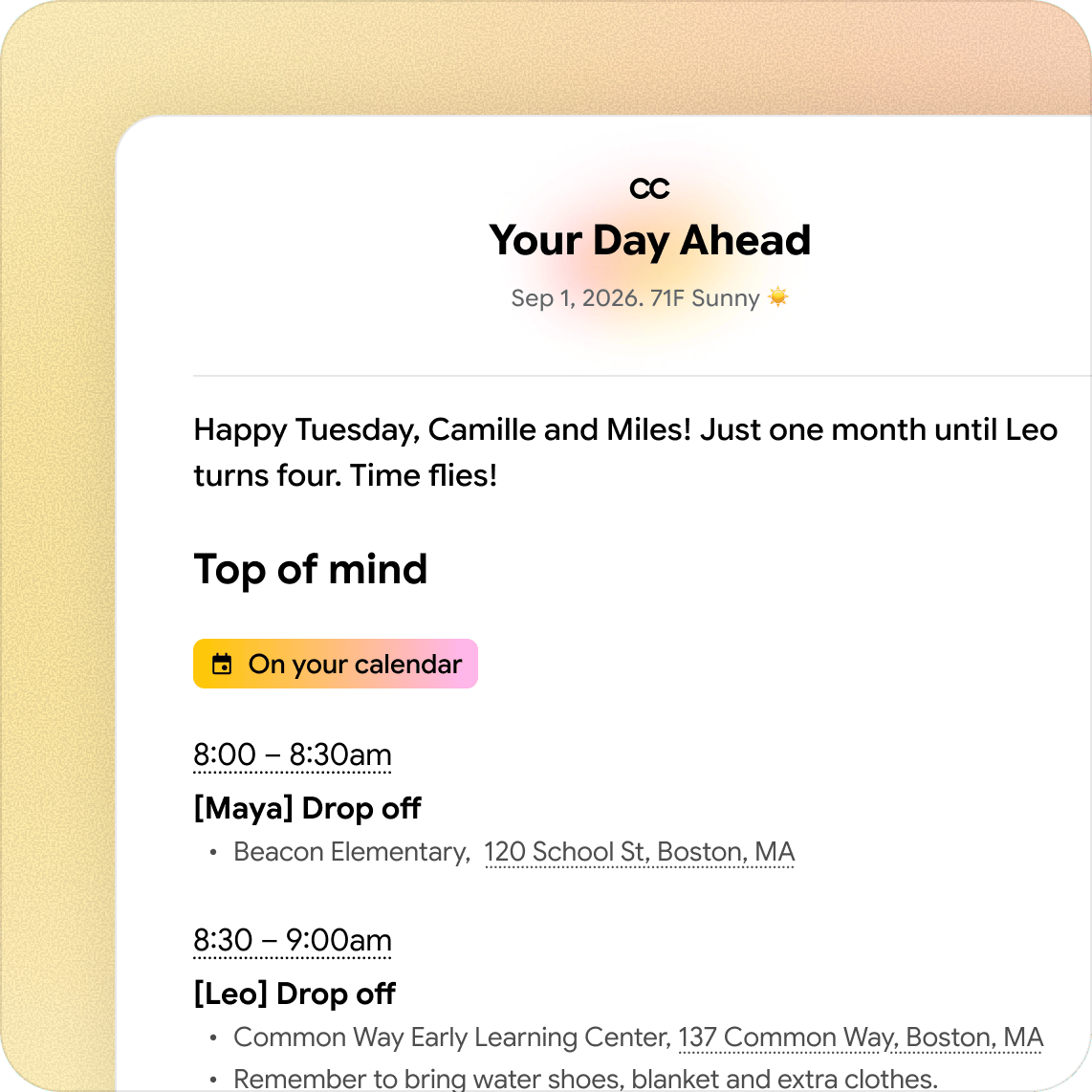
CC can also help with more hands-on household tasks. Google says the agent can assist with filling out permission slips and activity-registration PDFs, create school-supply lists, prepare weekly meal plans, calculate drive times between activities, and generate shared Docs or Sheets.
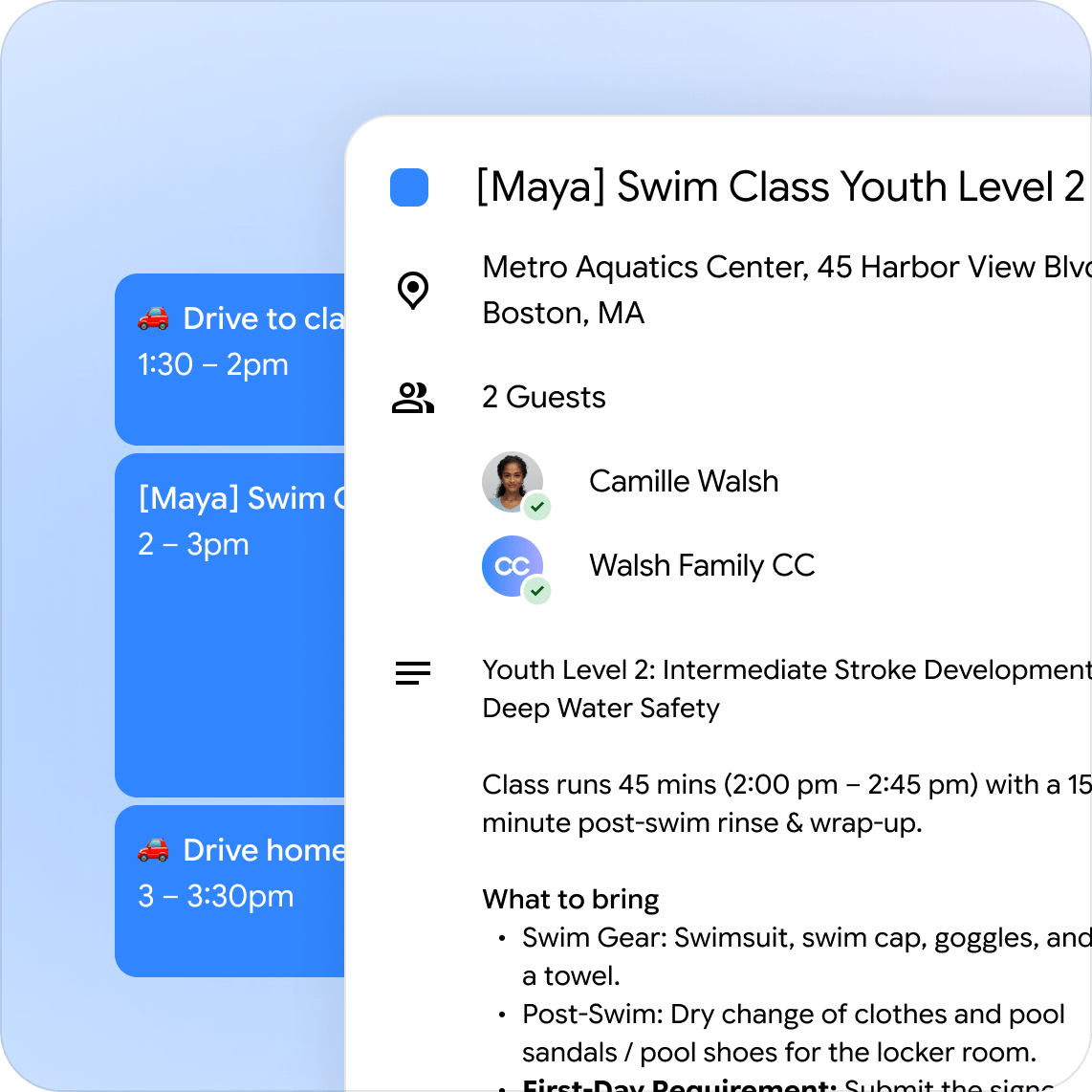
For actions that go beyond organizing information, CC is designed to ask for permission before proceeding. The agent can also request missing details and use what it learns to update its group memory.
That memory distinguishes between information that applies to the entire household and details connected to an individual member. Google gives examples such as a shared grocery list or favorite family restaurants on one side and personal dietary preferences or time zones on the other.
CC also gets a separate verified Google account, giving the agent its own identity when it interacts with members of the group. Google says it will only respond to those members and will not take action or share information outside the group without approval.
Behind the scenes, each CC instance runs on an isolated cloud computer powered by Google’s Antigravity agentic system and Gemini models. That setup allows it to work across Google services and external tools, including using the Google Maps API to check travel times.
The company is keeping the experiment limited for now. CC is available on web and mobile to U.S. users who are at least 18 years old and have a personal Google account.
Existing CC users will receive an invitation to upgrade to the family-focused version, while new users can join a waitlist.
The shift gives Google a more targeted use case for CC. Rather than acting only as an individual productivity assistant, the agent is being positioned as a shared household coordinator that can collect information from multiple people, organize it in one place and handle routine logistics with user approval.
This analysis is based on reporting from Google.
Images courtesy of Google.
This article was generated with AI assistance and reviewed for accuracy and quality.
