The move builds on Figma’s recent efforts to bridge the gap between design and engineering. The company previously launched Figma Make, an AI-powered prototyping tool, and later added integrations with Claude Code and Codex to streamline collaboration between designers and developers.
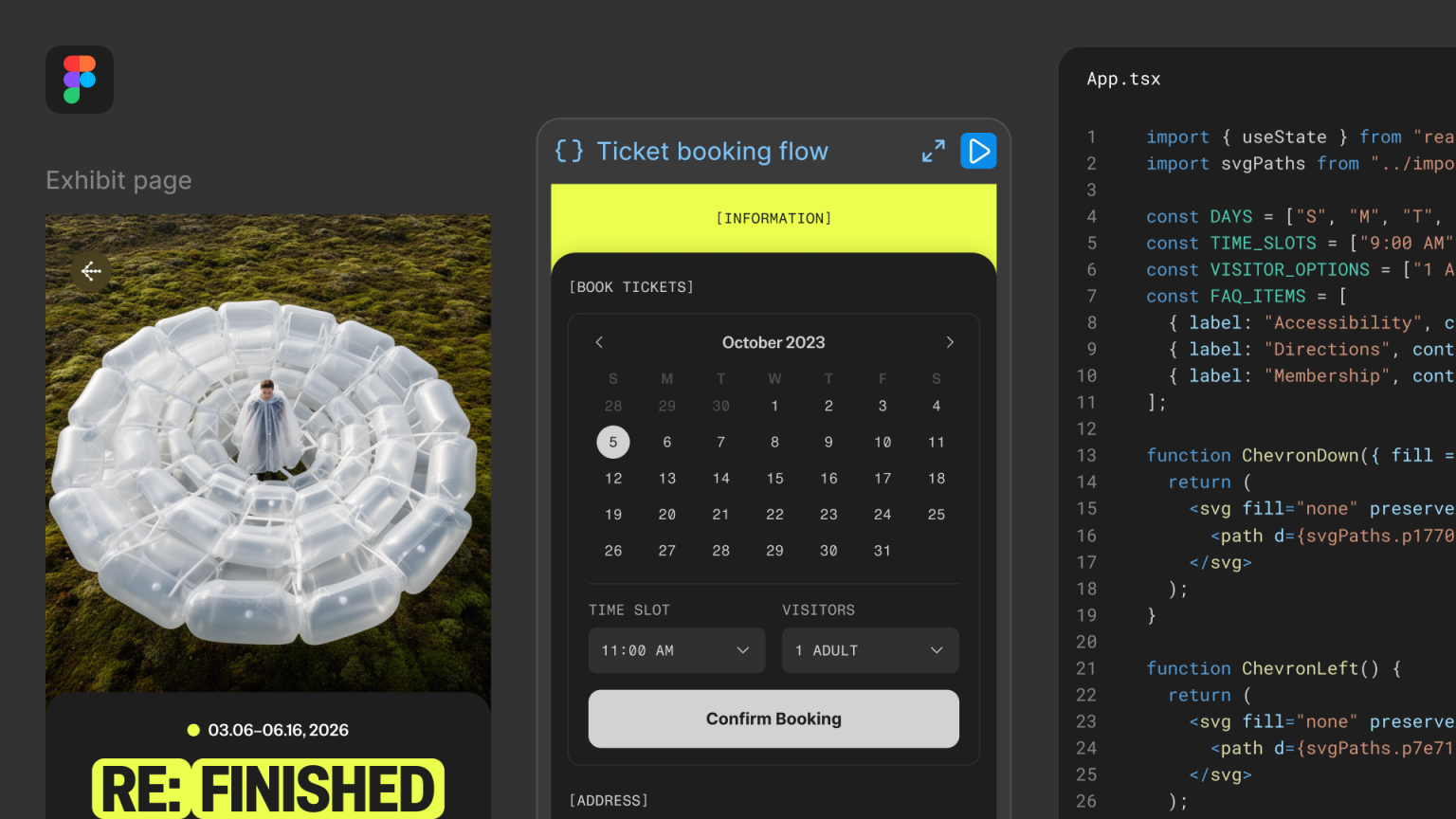
Yuhki Yamashita, Figma’s chief product officer, said the new code layer feature is intended to encourage rapid exploration across teams rather than focus on production-ready software.
“We think the multiplayer canvas is really powerful because this is an environment where you don’t really care about the quality of the code. If you’re rapidly exploring or need to kind of explore a bunch of new directions, you can do that in this spatial way. We hope that this feature produces different behaviour not just with designers, but also with engineers and PMs,” he said.
Alongside code integration, Figma is expanding its support for motion design. Designers can now build animations, transitions, and 3D transformations directly within the platform. Previously, many of those effects required work in separate applications before being converted into formats compatible with Figma.
The company is also extending its use of AI in visual creation. Users can generate assets with AI and apply AI-generated shader effects and fills as part of the design process.
Figma is continuing work on integrating Weavy, the node-based workflow platform it acquired last year. The tool enables designers to route tasks through multiple AI models and compare outputs. A future update scheduled for later this year will allow users to create Weavy workflows directly from within Figma.
The company is also upgrading its AI assistant with new capabilities tied to the collaborative canvas. Users can create repeatable AI skills through text prompts and connect external tools including Notion, Granola, Excel, and GitHub. Files can also be attached to provide additional context for AI-driven tasks.
Another addition focuses on plugin development. Figma said users will be able to generate custom plugins from prompts, enabling the creation of tools such as layout generators and vector path tracers without requiring traditional plugin development workflows.
Taken together, the updates further expand Figma beyond design creation, adding new tools aimed at integrating code, AI, and collaborative workflows within a single platform.
This analysis is based on reporting from TechCrunch.
Images courtesy of Figma.
This article was generated with AI assistance and reviewed for accuracy and quality.
