Apple said a study involving more than 1,000 participants compared the new heart rate system with leading wearables and found Apple Watch delivered the highest heart rate accuracy among the devices tested.
The watches will also collect heart rate variability, or HRV, as frequently as every five minutes, which Apple says is 24 times more often than before. Users will see two forms of the metric: Recovery HRV, focused on daily signs of stress and recovery, and overall HRV, which is intended to provide a longer-term view of health.
HRV is also being added to overnight Vitals, where it will be evaluated against each user's baseline. A new daytime view will provide another look at changes in health metrics as the day progresses.
Apple Watch Series 12 and Ultra 4 also introduce Readiness, a feature that combines recent activity, sleep and vital signs into a daily score ranging from zero to 10. The score is paired with one of four recommendations: Recover, Pace Yourself, Ready or Go For It.
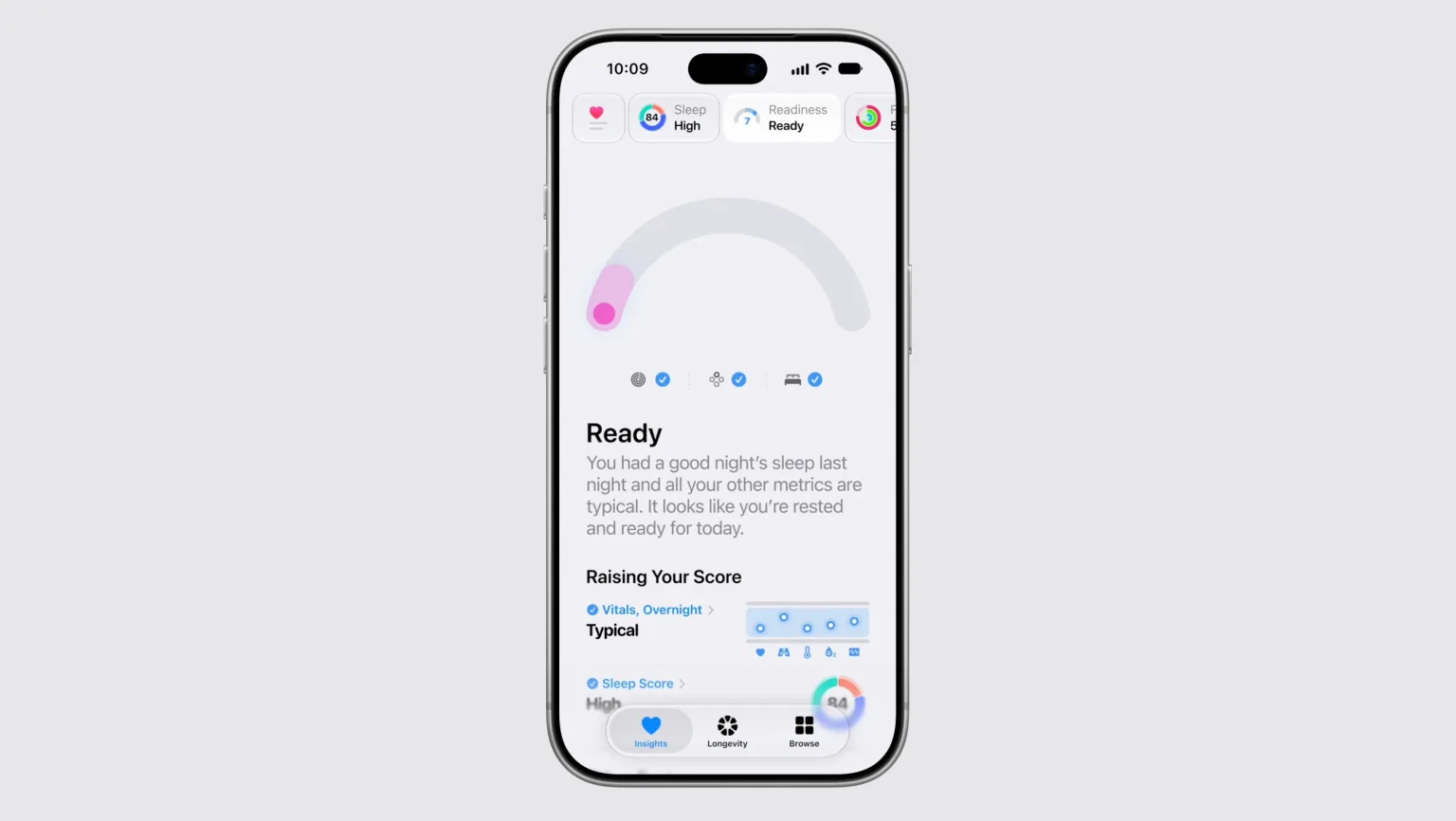
Readiness is not fixed at the beginning of the day. Apple says it can change as additional information arrives, including data from workouts and shifts in daytime vitals. Users can also see which measurements are contributing to the score. Apple developed the algorithm with exercise scientists and physicians using information from the Apple Heart and Movement Study.
“At Apple, we believe technology can empower everyone with actionable, science-based insights built with privacy at the core,” said Sumbul Desai, Apple’s vice president of Health and Fitness. “By combining breakthrough sensing on Apple Watch with Apple Intelligence in the Health app, we’re able to translate complex biometric data into clear guidance for users.”
Apple is also redesigning the Health app for iPhone and iPad with Apple Intelligence integrated into the experience. The updated app is designed to organize both short-term health information and longer-term trends while generating personalized guidance based on a user's own metrics.
A new Insights tab will summarize information across areas including heart health, sleep, fitness, readiness, vitals and cycle tracking. Its For You section can provide recommendations and relevant articles tied to recent data, such as suggesting changes to a sleep routine following several late nights.
Another new section, Longevity, focuses on longer-term information covering heart health, sleep, mental wellbeing, movement, metabolic health, hearing and nutrition.
Within that tab, Apple is introducing Health Age, which compares selected health measurements with a user's chronological age. The calculation can incorporate Apple Watch metrics including VO2 max, resting heart rate, sleep and HRV, as well as lab results such as A1c and LDL when users choose to add them.
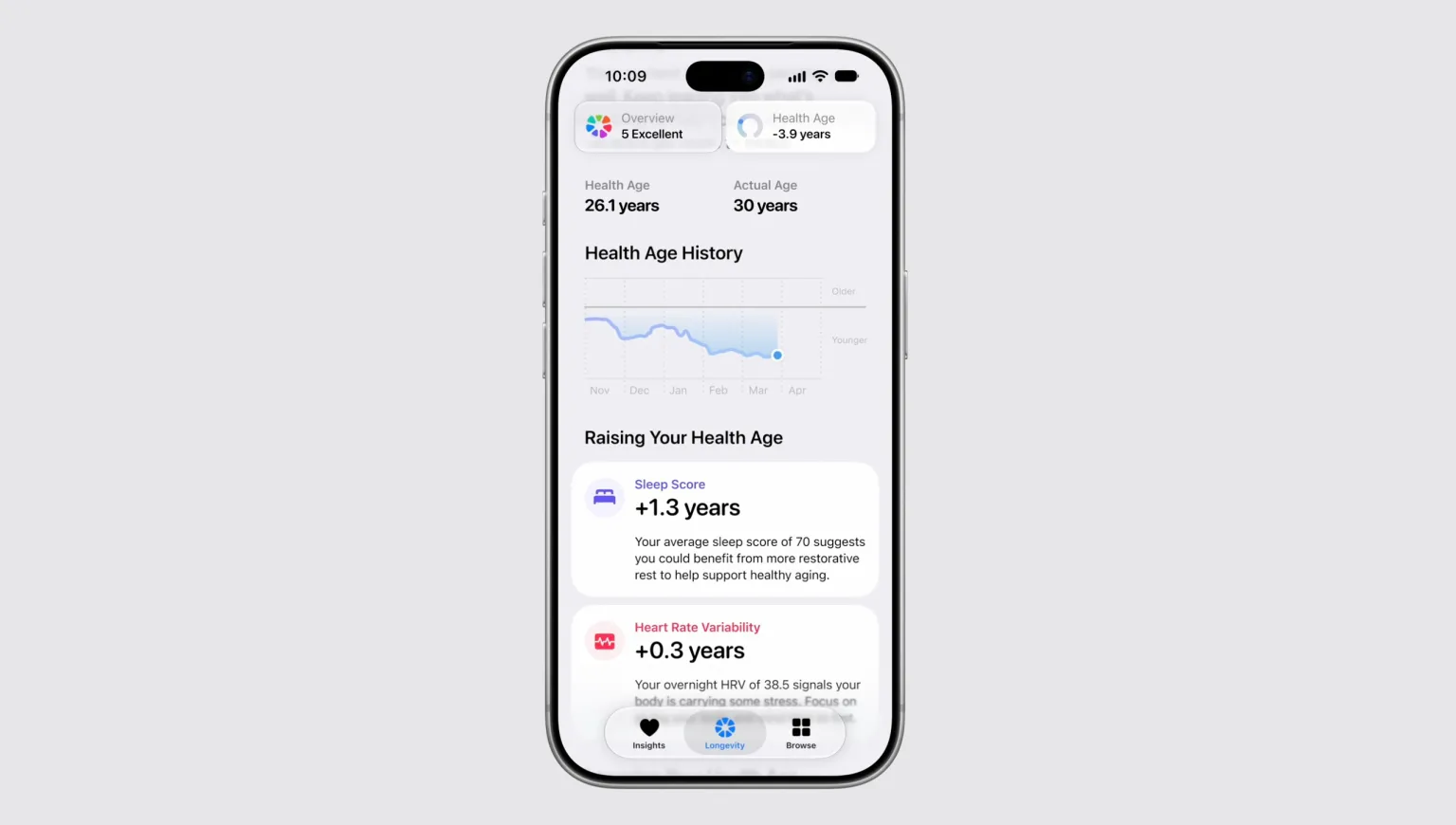
The Longevity experience can draw on information from iPhone, Apple Watch, AirPods, clinical health records and compatible third-party apps and devices. Users will see visual breakdowns of different health categories and can add more information through assessments and laboratory testing.
Apple is also bringing at-home movement evaluations to the Health app. Using an iPhone camera and Apple Watch, the system can assess flexibility, strength, balance, movement mechanics and VO2 max while providing visual and audio feedback.
Apple says the movement analysis uses vision-based AI models and runs entirely on the device. Video from the assessments is not recorded, stored or shared.
The Health app will also expand its support for laboratory data through Quest Diagnostics. Users will be able to purchase and schedule testing covering more than 50 biomarkers for $119 through the app at approximately 2,000 Quest locations in the U.S. Apple plans to connect those results with educational content from its health experts. Videos and articles can explain individual measurements and provide guidance based on a user's results. Movement assessments can similarly lead to educational material and exercises selected around the user's needs.
The company is also expanding Cycle Tracking in iOS 27 with support for perimenopause and menopause. Users will be able to record those stages, track symptoms and monitor changes in their cycles. People age 40 and older may receive a notification when changes in logged cycle patterns could be consistent with perimenopause. Users who record bleeding after menopause will receive a notification recommending that they speak with a doctor.
The redesigned Health app will become available later this year, initially in U.S. English, with additional languages planned afterward.
This analysis is based on reporting from Apple.
Images courtesy of Apple.
This article was generated with AI assistance and reviewed for accuracy and quality.
